
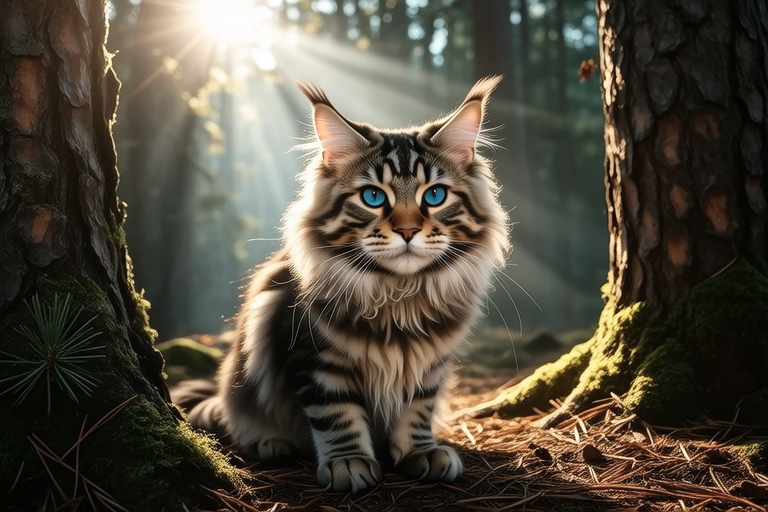
The Historical Origins and Evolution of Maine Coon Cats
Throughout history, the Maine Coon cat has been an enigma wrapped in fur, captivating the hearts of many with its unique charm and adaptability. Originating from the dense forests of North America, this breed has undergone a fascinating journey from its natural habitat to becoming one of the most beloved household pets. This article delves into the historical origins of the Maine Coon, exploring its evolution and adaptation over centuries, its initial roles, the myths surrounding its origin, and how it transitioned into a cherished companion.
Natural Habitat and Initial Roles
The Maine Coon cat’s natural habitat is primarily the dense forests of New England, particularly in Maine. These felines were originally semi-feral, thriving in the rugged wilderness where they hunted small prey such as rodents and birds. Their large paws, tufted ears, and thick, water-resistant coats were well-suited to the harsh conditions of the northeastern United States. The Maine Coon’s robust physique and keen hunting instincts made it an invaluable asset to early settlers, who relied on the cats to control rodent populations around farms and homesteads.
Myths Surrounding Their Origin
The origins of the Maine Coon are shrouded in myth and legend, with several tales attempting to explain the breed’s distinctive appearance. One popular myth involves Marie Antoinette, the ill-fated queen of France, who supposedly sent her prized Turkish Angora cats aboard a ship bound for the United States to escape the guillotine. The story goes that these cats interbred with local feral cats, producing the Maine Coon. However, there is no historical evidence to support this claim.
Another myth attributes the breed’s origins to a union between a raccoon and a domestic cat, which is biologically impossible. Despite these fanciful tales, the true origins of the Maine Coon remain a mystery, though it is generally accepted that the breed developed through natural selection in the wilds of New England.
Transition to Household Pets
As the American frontier expanded, the Maine Coon cat gradually transitioned from a working animal to a beloved household pet. Their friendly and affectionate nature, combined with their striking appearance, made them ideal companions for families. By the mid-19th century, Maine Coons were being exhibited at cat shows, gaining recognition for their unique qualities.
Notable Mentions in American History
Maine Coons have played a significant role in American history, with several notable mentions in literature and art. In 1878, the first recorded cat show in the United States was held in Boston, featuring a Maine Coon named Cosie, who won Best in Show. The breed’s popularity continued to grow, and by the early 20th century, it had become a favorite among cat enthusiasts.
During the Great Depression and World War II, the Maine Coon’s numbers declined due to economic hardships and a focus on more practical breeds. However, dedicated breeders worked tirelessly to preserve the breed, ensuring its survival for future generations.
Rise in Popularity and Significant Events
The Maine Coon experienced a resurgence in popularity during the latter half of the 20th century, thanks to the efforts of breeders and the establishment of the Cat Fanciers’ Association (CFA) in 1906. In 1976, the CFA officially recognized the Maine Coon as a championship breed, solidifying its place in the world of competitive cat shows.
A significant event in the Maine Coon’s rise to fame occurred in 1985 when a Maine Coon named Smokey won the prestigious Best in Show title at the CFA National Cat Show. This victory brought unprecedented attention to the breed, inspiring countless individuals to adopt and breed Maine Coons.
Key Characteristics and Adaptability
The Maine Coon’s adaptability is rooted in its physical and behavioral traits, which have remained consistent throughout its journey. These felines are known for their large size, reaching up to 15 pounds for males and 12 pounds for females. Their sturdy build, tufted ears, and long, flowing tails make them instantly recognizable.
One of the Maine Coon’s most notable characteristics is its intelligence and playful demeanor. These cats are often described as “dog-like” due to their loyalty, curiosity, and ability to learn tricks. Their social nature and affectionate behavior make them excellent companions for families and individuals alike.
Their thick, water-resistant coats provide protection against the elements, while their large paws enable them to navigate snow and rough terrain with ease. These adaptations allowed the Maine Coon to thrive in the wild, and they continue to be advantageous in domestic settings, making them suitable for both wild and domestic environments.
Current Status and Future Trends
Today, the Maine Coon is one of the most popular cat breeds in the world, cherished for its beauty, intelligence, and affectionate nature. Breeders continue to refine the breed, focusing on maintaining its distinctive characteristics while promoting health and longevity.
As society becomes increasingly aware of the importance of responsible pet ownership, there is a growing trend towards adopting rescue cats and supporting local shelters. This shift may lead to an increased interest in mixed-breed cats, including those with Maine Coon heritage. Additionally, advancements in veterinary care and genetics may offer new opportunities for improving the health and welfare of Maine Coons.
In conclusion, the Maine Coon cat’s journey from the dense forests of New England to the living rooms of families worldwide is a testament to its resilience, adaptability, and charm. As we look to the future, it is clear that the Maine Coon will continue to captivate and inspire, remaining a beloved and enduring symbol of feline grace and companionship.