
Heterometrus Spinifer: A Fascinating Journey into the World of Scorpions
The world of scorpions is a captivating realm filled with mystery and wonder. Among the many species that inhabit this fascinating domain, one stands out for its unique characteristics and intriguing behaviors – Heterometrus spinifer. This scorpion, native to Southeast Asia, is a true marvel of nature, offering insights into the adaptability and resilience of arachnids. Join us on a journey through the life, habitat, and significance of this remarkable creature.
Physical Characteristics
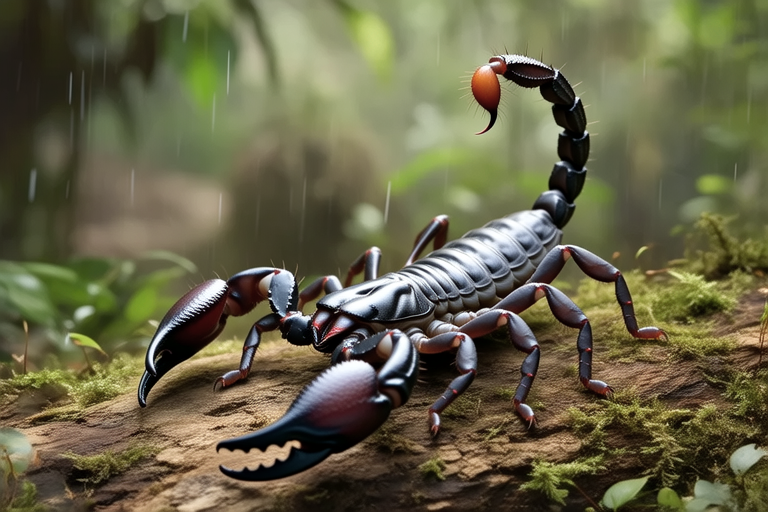
Heterometrus spinifer, commonly known as the Asian forest scorpion, boasts a striking appearance that sets it apart from other scorpion species. Its body is elongated and segmented, with eight legs and a pair of pincers called pedipalps. The most distinctive feature of this scorpion is its tail, which ends in a bulbous stinger. The overall coloration ranges from dark brown to black, providing excellent camouflage against the forest floor. One of the most notable features is the presence of a row of spines along the tail, giving rise to its name ‘spinifer.’
The pedipalps are particularly robust and play a crucial role in prey capture and defense. They are equipped with sharp claws that can exert considerable force, allowing the scorpion to subdue its victims effectively. The eyes of Heterometrus spinifer are located on the front of its carapace, providing excellent vision in low-light conditions, which is essential for nocturnal hunting.
Habitat and Behavior
Native to the lush forests of Southeast Asia, including regions of Thailand, Malaysia, and Indonesia, Heterometrus spinifer thrives in humid environments with dense vegetation. It prefers areas with plenty of cover, such as under rocks, logs, and leaf litter, where it can hide from predators and regulate its temperature. These scorpions are primarily terrestrial, spending most of their time on the ground, but they are also adept climbers, often found on tree trunks and branches.
As a nocturnal predator, Heterometrus spinifer emerges at night to hunt for small insects, spiders, and other arthropods. It uses its keen sense of touch and vibration detection to locate prey, approaching cautiously before striking with its powerful pedipalps. Once captured, the scorpion injects venom into its victim, paralyzing it and making it easier to consume. Despite its formidable appearance, this scorpion is generally shy and non-aggressive towards humans, only resorting to defensive stings when threatened.
Myths and Misconceptions
One common myth surrounding Heterometrus spinifer is the belief that all scorpions are highly venomous and dangerous to humans. While it’s true that their venom can be potent, the effects on humans vary widely depending on the individual and the amount of venom injected. In reality, the sting of Heterometrus spinifer is rarely fatal and more likely to cause localized pain, swelling, and discomfort. Another misconception is that scorpions glow under ultraviolet light due to their venom. While some species do fluoresce, this phenomenon is unrelated to venom production and serves as a means of protection against UV radiation.
Venom and Diet
The venom of Heterometrus spinifer contains a complex cocktail of neurotoxins and enzymes designed to immobilize prey and aid in digestion. Research has shown that the venom’s primary component, chlorotoxin, selectively binds to certain types of cancer cells, making it a promising candidate for medical research. Scientists are exploring its potential applications in targeted drug delivery systems and cancer treatments.
In terms of diet, Heterometrus spinifer is an opportunistic feeder, preying on a wide range of small animals. Its diet consists mainly of insects, spiders, and other arthropods, though it may occasionally consume small vertebrates like lizards or frogs. The scorpion’s ability to adapt its feeding habits based on availability ensures its survival in diverse environments.
Mating Habits
The reproductive cycle of Heterometrus spinifer begins with a complex courtship ritual that involves elaborate movements and chemical signals. During mating, the male deposits a spermatophore, a capsule containing sperm, onto the ground. He then guides the female over the spermatophore using his pedipalps, ensuring successful fertilization. After mating, the female carries her eggs internally for several months before giving birth to live young. Typically, she will produce between 20 and 40 offspring, each measuring around 1 centimeter in length. The juveniles remain close to their mother for several weeks, receiving protection until they are large enough to fend for themselves.
Role in Ecosystem
Heterometrus spinifer plays a vital role in maintaining the balance of its ecosystem by controlling populations of harmful insects and promoting biodiversity. As both predator and prey, it contributes to the intricate web of life within its habitat. By regulating insect populations, these scorpions help prevent outbreaks that could devastate crops and forests. Additionally, their presence serves as an indicator of environmental health, reflecting changes in climate, pollution levels, and habitat quality.
Conservation Efforts
Despite its ecological importance, Heterometrus spinifer faces numerous threats due to habitat destruction, deforestation, and human encroachment. Conservationists are working tirelessly to protect this species and its environment through various initiatives. One such effort involves establishing protected areas and wildlife corridors to preserve critical habitats and promote connectivity between fragmented ecosystems. Education campaigns aim to raise awareness among local communities about the value of these scorpions and encourage sustainable land-use practices.
Another approach focuses on scientific research to better understand the biology, behavior, and distribution of Heterometrus spinifer. By gathering data on population trends, genetic diversity, and environmental preferences, researchers can develop targeted conservation strategies that address specific challenges faced by this species. Furthermore, partnerships between governments, NGOs, and private organizations are essential for implementing effective policies and securing funding for long-term preservation projects.
Conclusion
Heterometrus spinifer is a testament to the incredible diversity and adaptability of life on Earth. From its unique physical characteristics to its important role in the ecosystem, this scorpion offers valuable lessons about coexistence and sustainability. By learning more about its biology and behavior, we can gain a deeper appreciation for the intricate relationships that exist within nature and work together to ensure the survival of this fascinating creature and its habitat.