
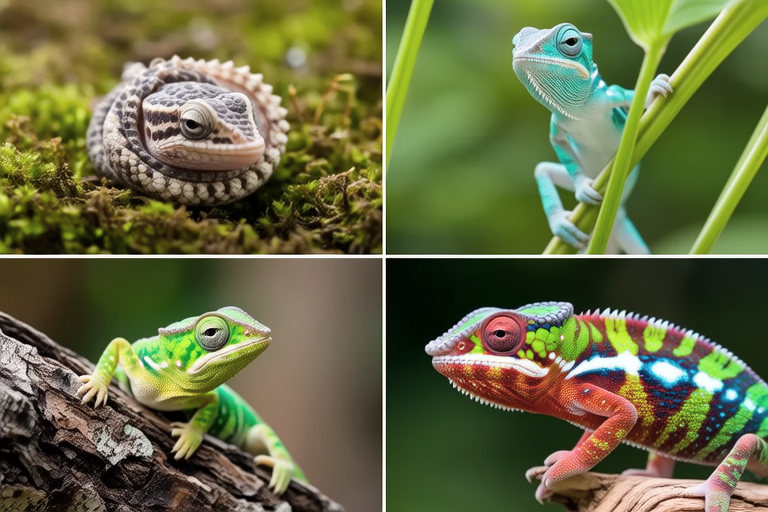
From Tiny Hatchling to Full-Grown Beauty: A Journey Through Chameleon Growth Stages
Welcome to the fascinating world of chameleons! These captivating reptiles are known for their unique ability to change color, but there’s much more to these creatures than meets the eye. From their birth as tiny, vulnerable hatchlings to their transformation into full-grown beauties, chameleons undergo several distinct stages of growth. This article will guide you through the various phases of a chameleon’s life, providing valuable insights into their development, care, and well-being.
The Birth of a Chameleon
Chameleons are born with a set of unique characteristics that make them stand out from other reptiles. Newborn chameleons, or hatchlings, are typically around two inches in length and weigh less than one gram. Their eyes are already fully functional, allowing them to focus on prey items from a distance. They also possess prehensile tails, which help them climb and maintain balance on branches. Interestingly, their coloration is often duller compared to adults, with some species displaying a mix of brown and green hues.
One of the most remarkable features of newborn chameleons is their ability to change color almost immediately after hatching. This adaptation helps them blend into their surroundings, providing essential camouflage against predators. Additionally, hatchlings have a relatively high metabolism, which means they need to consume food frequently to meet their energy requirements.
Stage One: The Hatchling Phase (0-3 Months)
The first three months of a chameleon’s life are critical for survival and development. During this period, the hatchling’s body undergoes rapid growth, and it is essential to provide appropriate care to support this process. Here are some key points to consider:
Physical Development
Hatchlings grow rapidly during the first few weeks of life, increasing their size by up to 50% every week. Their limbs become stronger, and their tails develop better gripping abilities. By the end of the third month, they will have reached approximately half of their adult size.
Nutritional Needs
Proper nutrition is vital for the healthy development of hatchlings. Insects such as crickets, mealworms, and dubia roaches should be offered daily. It’s important to gut-load these insects with nutritious foods like vegetables and fruits before feeding them to your chameleon. Additionally, vitamin and mineral supplements can be dusted onto the insects to ensure adequate intake of essential nutrients.
Habitat Adjustments
A suitable enclosure is crucial for the well-being of young chameleons. A screen cage measuring at least 18x18x36 inches is recommended for the first three months. The temperature gradient within the enclosure should range between 75-90°F, with a basking spot reaching up to 100°F. Humidity levels should be maintained between 40-60%, and regular misting is necessary to provide fresh water for drinking and hydration.
Common Health Issues
Respiratory infections and dehydration are common concerns for hatchlings. To prevent respiratory issues, ensure proper ventilation and avoid overcrowding. Regular misting and provision of clean, fresh water are essential for preventing dehydration. If you notice any signs of illness, such as lethargy, loss of appetite, or labored breathing, consult a veterinarian specializing in reptiles immediately.
Stage Two: The Juvenile Phase (3-6 Months)
As chameleons enter the juvenile phase, they continue to grow and develop at a steady pace. This period marks significant milestones in both physical and behavioral aspects.
Physical Development
Juvenile chameleons experience a noticeable increase in body size, reaching about two-thirds of their adult length by six months. Their skin becomes thicker and more robust, providing better protection against environmental factors. Their color-changing abilities also improve, allowing them to display a wider range of colors.
Nutritional Needs
The dietary requirements of juveniles are similar to those of hatchlings, but the quantity of food may need adjustment based on individual growth rates. Continue offering a variety of insects and supplement their diet with leafy greens to promote overall health. Ensure that the insects are appropriately sized for the chameleon’s mouth to prevent choking hazards.
Habitat Adjustments
As juveniles grow larger, they require a more spacious enclosure. A 24x24x48-inch screen cage is ideal for this stage. Maintain the same temperature and humidity settings as previously mentioned. Introduce vertical climbing structures and foliage to encourage natural behavior and exercise.
Common Health Issues
Metabolic bone disease (MBD) is a prevalent concern during the juvenile phase. Insufficient calcium intake or improper calcium-to-phosphorus ratios in the diet can lead to MBD. Signs include softening of bones, difficulty moving, and swollen limbs. Regular veterinary check-ups and proper supplementation can help prevent this condition.
Stage Three: The Subadult Phase (6-12 Months)
The subadult phase marks the transition from juvenile to adult, characterized by continued growth and maturation.
Physical Development
Subadult chameleons reach nearly 90% of their adult size by the end of this phase. Their color-changing abilities become more refined, and they start exhibiting adult-like behaviors. Sexual dimorphism becomes more apparent, with males developing prominent crests and females showing subtle differences in head shape.
Nutritional Needs
The diet remains largely unchanged, but the frequency of feeding may decrease slightly. Focus on providing a balanced diet rich in protein, vitamins, and minerals. Continue to offer a variety of insects and leafy greens. Monitor your chameleon’s weight and adjust the amount of food accordingly.
Habitat Adjustments
Adult-sized enclosures, measuring at least 36x36x60 inches, are necessary for subadults. Ensure ample space for climbing and basking. Install UVB lighting to facilitate calcium absorption and maintain overall health. Regular misting and provision of clean water remain crucial.
Common Health Issues
Dehydration and stress-related illnesses are common during this phase. Ensure consistent access to fresh water and maintain a calm environment to reduce stress. Regular veterinary check-ups can help identify and address potential health issues early.
Stage Four: The Adult Phase (12+ Months)
Once chameleons reach adulthood, they exhibit mature physical traits and behaviors. Adults are generally more independent and less reliant on human interaction.
Physical Development
Adult chameleons have reached their full size and weight. Their color-changing abilities are at their peak, and they can display vibrant patterns and hues. Sexual dimorphism becomes even more pronounced, with males often showcasing elaborate displays during courtship.
Nutritional Needs
The dietary requirements of adult chameleons remain similar to those of subadults. However, the frequency of feeding may decrease further. Offer a varied diet consisting of insects and leafy greens. Monitor your chameleon’s weight and adjust the amount of food as needed.
Habitat Adjustments
Adult chameleons thrive in large, well-ventilated enclosures. Provide ample space for climbing and basking. Install UVB lighting and maintain appropriate temperature and humidity levels. Regular misting and provision of clean water are still essential.
Common Health Issues
Adult chameleons are prone to stress-related illnesses, metabolic bone disease, and reproductive issues. Regular veterinary check-ups can help detect and manage these conditions effectively. Maintain a stable environment and provide appropriate care to ensure a long, healthy life.
Tips for Owners
Caring for chameleons requires dedication and attention to detail. Here are some tips to help you provide the best possible care for your chameleon at each stage of its life:
- Regular Veterinary Check-Ups: Schedule routine visits with a reptile specialist to monitor your chameleon’s health and address any concerns promptly.
- Proper Housing: Ensure that the enclosure is appropriately sized and equipped with necessary accessories such as climbing structures, UVB lighting, and misting systems.
- Dietary Variety: Offer a diverse range of insects and leafy greens to meet your chameleon’s nutritional needs.
- Environmental Enrichment: Provide opportunities for climbing, basking, and exploring to stimulate natural behaviors.
- Hydration: Maintain consistent access to fresh water through misting and water dishes.
Conclusion
From tiny hatchlings to full-grown beauties, chameleons undergo an incredible journey of growth and development. Understanding the unique characteristics and needs of each growth stage is essential for providing optimal care. By following the guidelines outlined in this article, you can ensure a long, healthy, and fulfilling life for your chameleon. Embrace the adventure of watching your chameleon transform and thrive, and enjoy the rewarding experience of caring for one of nature’s most fascinating creatures.