How to Keep Your Energetic Abyssinian Busy and Happy
Welcome to the world of Abyssinian cats! These intelligent and playful felines are known for their high energy levels and curiosity. As an Abyssinian owner, you have the unique opportunity to provide your cat with a stimulating environment that keeps them engaged and content. In this guide, we will explore how to understand your Abyssinian’s behavior, select appropriate toys, create interactive playtime, set up stimulating environments, establish routines, incorporate puzzle feeders for meals, and offer regular exercise. We’ll also discuss tips for mental stimulation and advice on maintaining their health through activities.
Understanding Abyssinian Cat Behaviors
Abyssinians are one of the most active cat breeds, always on the go. They love exploring their surroundings, climbing, and playing. To keep your Abyssinian happy, it’s important to understand their natural instincts and behaviors. These cats are highly social and enjoy interacting with their human companions. They may follow you around the house, wanting to be involved in everything you do. Abyssinians also have a strong prey drive, making them excellent hunters. Understanding these behaviors can help you tailor activities that satisfy their needs.
Selecting Appropriate Toys
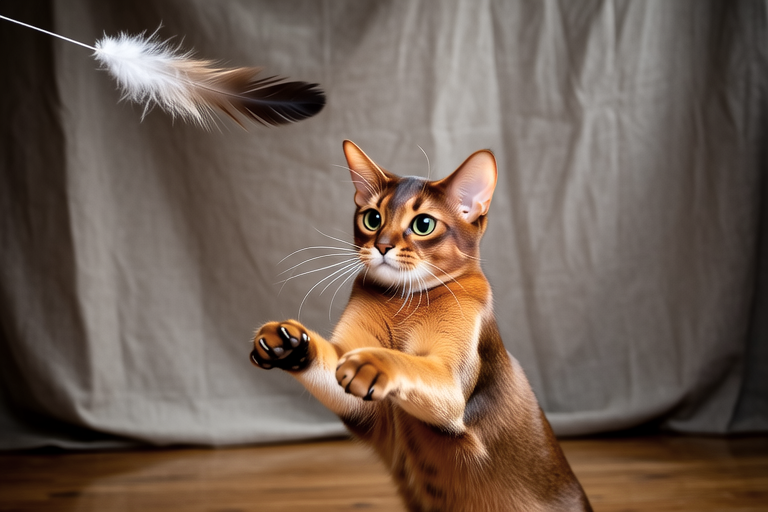
Toys are essential for keeping your Abyssinian busy and entertained. Look for toys that stimulate their hunting instincts and provide mental and physical challenges. Interactive toys like laser pointers, feather wands, and battery-operated mice are great options. Puzzle toys that dispense treats when manipulated are also excellent for mental stimulation. Avoid toys that could pose a choking hazard or cause injury. Rotate toys periodically to maintain your cat’s interest and prevent boredom.
Creating Interactive Playtime
Interactive playtime is crucial for your Abyssinian’s well-being. Spend at least 15-20 minutes each day engaging in play with your cat. Use toys that encourage jumping, pouncing, and chasing. This not only provides exercise but also strengthens your bond with your cat. Try different types of play to see what your Abyssinian enjoys most. Some cats prefer chasing after toys, while others may enjoy batting at objects. Make sure to vary the type of play to keep things interesting.
Setting Up Stimulating Environments
Abyssinians thrive in environments that challenge their minds and bodies. Create spaces within your home that encourage exploration and play. Install cat trees with multiple levels and perches, allowing your cat to climb and observe their surroundings. Provide scratching posts and cardboard boxes for hiding and climbing. Consider adding tunnels and other interactive elements to keep your Abyssinian engaged. A stimulating environment helps reduce stress and keeps your cat mentally sharp.
Establishing Routines
Routines provide structure and predictability for your Abyssinian, which can help reduce anxiety and promote a sense of security. Establish consistent feeding times, play sessions, and grooming schedules. Abyssinians are creatures of habit and appreciate knowing what to expect each day. Incorporate short, regular periods of interaction into your daily routine to ensure your cat feels connected and valued.
Incorporating Puzzle Feeders for Meals
Puzzle feeders are a fantastic way to engage your Abyssinian’s mind during mealtime. These toys require your cat to work for their food, mimicking the natural hunting process. Puzzle feeders come in various forms, such as treat-dispensing balls, mazes, and interactive feeders. Using puzzle feeders can help control portion sizes and prevent overeating. It also provides mental stimulation, keeping your cat occupied and entertained between meals.
Offering Regular Exercise
Regular exercise is vital for maintaining your Abyssinian’s physical health. In addition to interactive playtime, consider incorporating structured exercise into your cat’s routine. Set aside time each day for supervised outdoor activities if possible, ensuring safety by keeping your cat on a leash or in a secure enclosure. Indoor cats can benefit from agility courses made from household items, encouraging jumping, running, and climbing. Encourage your Abyssinian to chase after toys or engage in games that promote physical activity.
Tips for Mental Stimulation
Mental stimulation is just as important as physical activity for your Abyssinian. Here are some additional tips to keep your cat’s mind sharp:
- Teach your cat simple tricks, such as sitting or shaking paws.
- Introduce new toys and rotate them regularly to prevent boredom.
- Provide opportunities for problem-solving, such as stacking blocks or knocking down objects.
- Engage in scent-based games, hiding treats or toys with different scents.
- Encourage social interactions with other pets or people.
Maintaining Health Through Activities
Physical and mental activities contribute significantly to your Abyssinian’s overall health. Regular exercise helps maintain a healthy weight, prevents obesity-related diseases, and promotes cardiovascular health. Mental stimulation supports cognitive function, reduces stress, and enhances mood. By providing a balanced combination of physical and mental activities, you can help your Abyssinian live a long, healthy, and happy life.
In conclusion, keeping your energetic Abyssinian busy and happy requires understanding their behaviors, providing appropriate toys, creating interactive playtime, setting up stimulating environments, establishing routines, incorporating puzzle feeders for meals, and offering regular exercise. By following these guidelines, you can ensure your Abyssinian remains physically fit, mentally stimulated, and emotionally satisfied. With a little creativity and effort, you can provide your Abyssinian with a fulfilling and enriching lifestyle that keeps them content and thriving.
