
From Jungle to Couch: The Astonishing Journey of Bengal Cats
The Bengal cat, with its striking appearance and dynamic personality, has captured the hearts of many cat lovers worldwide. Originating from the lush jungles of Asia, this breed boasts a fascinating history that spans centuries, culminating in its current status as a popular household pet. This article delves into the wild roots of the Bengal cat, detailing its physical attributes, the journey of domestication, and its unique behavior as a companion animal.
Wild Origins and Physical Characteristics
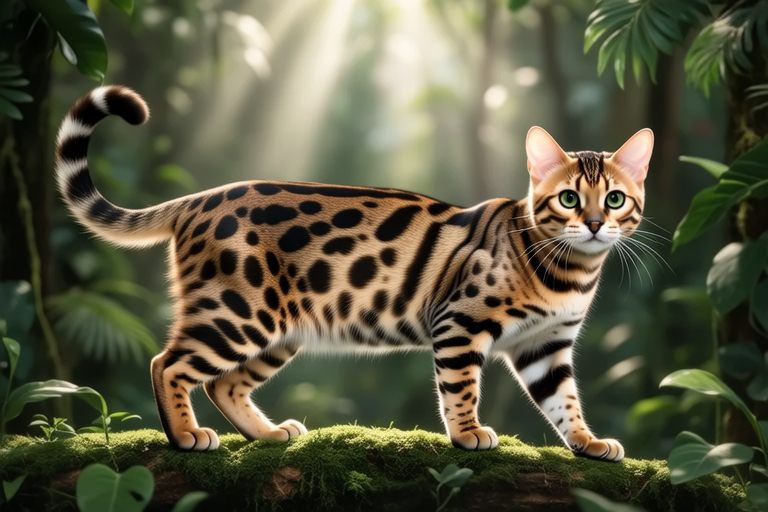
The Bengal cat’s story begins in the dense jungles of Asia, where its ancestors roamed freely. These wildcats, known for their agility and stealth, thrived in the challenging environment of the forest. The modern Bengal cat retains many of these traits, making it a standout among domestic breeds. With their sleek, muscular bodies and large paws, Bengal cats exude grace and power. Their most distinctive feature, however, is their coat. Often described as ‘leopard-like,’ Bengal cats have a luxurious, short-haired coat adorned with spots or marbled patterns. These markings, combined with their mesmerizing, almond-shaped eyes, give them an almost otherworldly appearance.
The Domestication Journey
The path to domestication for the Bengal cat was anything but straightforward. It began in the early 20th century when breeders sought to create a cat with the beauty and allure of the wild leopard, yet with the temperament of a domestic pet. One of the key figures in this endeavor was Jean Mill, who played a pivotal role in the development of the Bengal breed. In the 1960s, she crossbred Asian Leopard Cats (ALC) with domestic shorthair cats, aiming to preserve the exotic appearance of the ALC while fostering a friendly and sociable nature.
This process, however, was fraught with challenges. Breeding between wild and domestic species is complex and requires careful selection to ensure genetic health and compatibility. Over the decades, dedicated breeders refined the Bengal breed, achieving a balance between the wild heritage and domestic adaptability. Today, Bengal cats are recognized by various cat registries, including The International Cat Association (TICA).
Anecdotes and Notable Bengal Cats
To bring the Bengal breed to life, let us share a few stories about notable Bengal cats. One such story is of Tiger, a Bengal cat who became an internet sensation for his remarkable resemblance to a small leopard. Tiger’s owner, Sarah, shared countless videos of her cat leaping through trees and playing with toys, showcasing the breed’s natural athleticism and playfulness. Another famous Bengal cat is Kona, who starred in commercials and advertisements, further cementing the breed’s reputation as a model pet.
These anecdotes highlight the unique personalities of Bengal cats. Each one is a testament to the breed’s adaptability and charm, showing that despite their wild ancestry, they can thrive in a variety of environments, from bustling city apartments to serene country homes.
Behavior and Traits as Pets
Bengal cats are known for their high energy levels and playful dispositions, making them excellent companions for active individuals or families. Their curiosity and intelligence mean they are always exploring their surroundings, often climbing and jumping to new heights. This trait is a direct carryover from their wild ancestors, who needed to be adept at navigating their environment.
In addition to their physical activity, Bengal cats are highly social animals. They enjoy interacting with their owners, seeking attention and affection. Many Bengal owners report that their cats are vocal and communicative, often meowing or chirping to express their needs or simply to engage in conversation. This social nature makes them ideal for households where they will receive plenty of interaction and mental stimulation.
Despite their energetic and sometimes mischievous nature, Bengal cats are generally well-behaved and trainable. They can be taught simple commands and tricks, which keeps them mentally engaged and prevents boredom. Owners often find that providing toys and puzzle feeders helps satisfy their cats’ need for mental and physical stimulation.
Conclusion: From Wild to Domestic
The journey of the Bengal cat from the jungle to the couch is a testament to the adaptability and charm of this extraordinary breed. From their wild origins in the forests of Asia to their current status as beloved pets, Bengal cats have proven their ability to thrive in a variety of environments. Their sleek coats, mesmerizing eyes, and playful dispositions make them stand out among other domestic cats.
As we reflect on their journey, it becomes clear that the success of the Bengal breed lies in the careful breeding efforts of dedicated enthusiasts and the inherent qualities of the cats themselves. Whether you’re a seasoned cat lover or considering adding a Bengal to your family, these cats offer a unique blend of wild beauty and domestic charm that is sure to captivate and delight.