
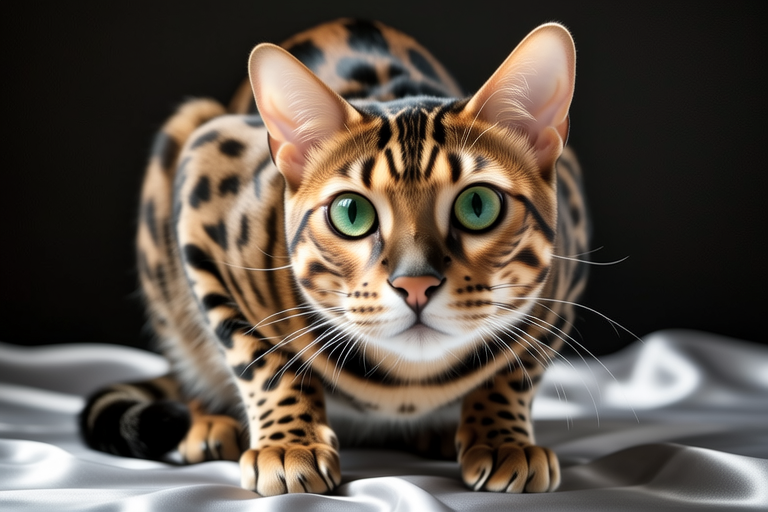
Bengal Cats: The Secret Behind Their Spots and Stripes
Bengal cats have captured the hearts of cat enthusiasts worldwide with their striking appearance that seems almost too good to be true. With coats that mimic the sleek fur of leopards and ocelots, these felines exude a wild charm that sets them apart from other domestic breeds. But behind their exotic looks lies a fascinating story of genetic inheritance and selective breeding.
The Exotic Appearance and Wild Ancestry
The Bengal cat’s most recognizable feature is its luxurious coat, which comes in various patterns, including spots and marbling. These patterns are reminiscent of their wild ancestors, particularly the Asian leopard cat (Prionailurus bengalensis). The Asian leopard cat is a small wild cat native to Asia, known for its beautiful spotted coat and agile nature. In the mid-20th century, breeders began crossing domestic cats with Asian leopard cats to create a breed that retained the beauty and grace of their wild relatives while remaining friendly and trainable enough to live comfortably in homes.
Through careful selection and breeding, Bengal cats have become a popular choice for cat lovers who appreciate both the aesthetic appeal and the playful nature of this unique breed. Despite their wild appearance, Bengal cats are entirely domesticated and do not exhibit any of the aggression or unpredictability associated with their wild cousins.
Genetic Factors Behind the Coat Patterns
The distinct coat patterns of Bengal cats are the result of complex genetic interactions. One of the key genes involved in determining their coat color and pattern is the agouti gene. This gene regulates the distribution of pigment within individual hairs, leading to the characteristic banded appearance of the Bengal’s fur. When the agouti gene is active, it produces a ticked or agouti coat, where each hair has alternating bands of light and dark color. This gives the Bengal cat its signature rosette spots and marbled patterns.
In addition to the agouti gene, several other genes contribute to the diversity of coat patterns seen in Bengal cats. For example, the tabby gene plays a crucial role in creating the classic tabby markings, which are often seen in young Bengal kittens. As the kittens grow, these markings may evolve into more complex patterns, such as spots or marbling. The dominant white spotting gene can also influence coat patterns, sometimes resulting in areas of solid color or white patches.
Differences Between Spots and Marbling
One of the most intriguing aspects of Bengal cats is the variety of coat patterns they display. Two of the most common patterns are spots and marbling. Spotted Bengals have a coat covered in distinct, well-defined spots that resemble those of a leopard or jaguar. These spots can vary in size and shape, but they are typically round or oval with a lighter center surrounded by darker edges. Some Bengal cats even have spots that form clusters or chains, giving their coats a unique and mesmerizing appearance.
Marbled Bengals, on the other hand, have a more intricate and flowing pattern. Their coats feature swirls and whorls of contrasting colors, creating a marble-like effect. The marbling pattern is often compared to the grain in wood or the flow of water, making each Bengal cat’s coat truly one-of-a-kind. While spotted patterns tend to be more common in younger Bengals, marbling becomes more pronounced as the cats mature.
The development of these patterns begins early in a Bengal cat’s life. Kittens are usually born with a plain, mackerel-striped coat, which gradually transforms into the more complex patterns we associate with adult Bengals. By the time they reach six months of age, most Bengal cats have developed their final coat pattern. However, some changes may still occur during the first few years of life as the cat’s coat continues to mature.
Temperament and Care Requirements
Beyond their stunning appearance, Bengal cats are known for their playful and intelligent personalities. They are highly active and curious, often engaging in games that require agility and coordination. Many Bengal owners report that their cats enjoy playing fetch, climbing, and exploring new environments. This high energy level means that Bengal cats need plenty of mental and physical stimulation to stay happy and healthy.
In terms of care, Bengal cats have relatively low-maintenance grooming needs. Their short, dense coats shed moderately, so regular brushing can help keep loose fur under control. However, their active lifestyles mean that they require ample space to move around and play. Providing your Bengal cat with vertical spaces, such as cat trees or shelves, can help satisfy their desire for height and exploration.
Bengal cats are generally social and enjoy interacting with their human companions. They tend to form strong bonds with their owners and can be quite affectionate, though they may not always seek out attention in the same way that some other cat breeds do. Instead, Bengal cats often prefer to engage in interactive play or simply be in the same room as their humans. Early socialization and positive reinforcement training can help ensure that your Bengal cat grows up to be a well-adjusted and confident companion.
Why Bengal Cats Are Popular Among Cat Enthusiasts
The popularity of Bengal cats stems from their unique combination of beauty, intelligence, and personality. Their striking appearance and wild heritage make them stand out from other domestic breeds, while their friendly and playful nature ensures that they are just as enjoyable to live with as they are to look at. Many cat enthusiasts are drawn to Bengal cats because of their distinctive coat patterns, which provide endless fascination for admirers.
Another reason for the breed’s popularity is their adaptability. Bengal cats can thrive in a variety of living situations, from spacious homes with ample room for play to smaller apartments where they can still find ways to exercise and explore. As long as their basic needs for stimulation and interaction are met, Bengal cats can be content in most environments.
Tips for Potential Owners
If you’re considering bringing a Bengal cat into your home, there are several important factors to keep in mind. First and foremost, it’s essential to choose a reputable breeder who prioritizes the health and well-being of their cats. Responsible breeders will provide documentation of health clearances and vaccination records, ensuring that your new pet is healthy and ready for a new home.
Once you’ve brought your Bengal cat home, it’s important to establish routines that cater to their needs. Regular play sessions and opportunities for exploration can help keep your cat mentally and physically stimulated. Providing a variety of toys and activities can prevent boredom and destructive behavior. Additionally, maintaining a clean litter box and providing fresh food and water are essential for your cat’s overall health and happiness.
Finally, be prepared for the fact that Bengal cats may have slightly different care requirements than other breeds. Their active nature means that they may require more frequent veterinary check-ups to monitor their weight and overall health. Additionally, their intelligence and curiosity can sometimes lead to behaviors that require patience and understanding. With proper care and attention, however, Bengal cats can make wonderful and rewarding companions.
In conclusion, Bengal cats are a breed that captivates both the eye and the heart. Their exotic appearance, combined with their playful and intelligent personalities, makes them a favorite among cat enthusiasts. Understanding the genetic factors behind their coat patterns and knowing how to care for these special cats can help ensure that they bring joy and companionship to your home for many years to come.