
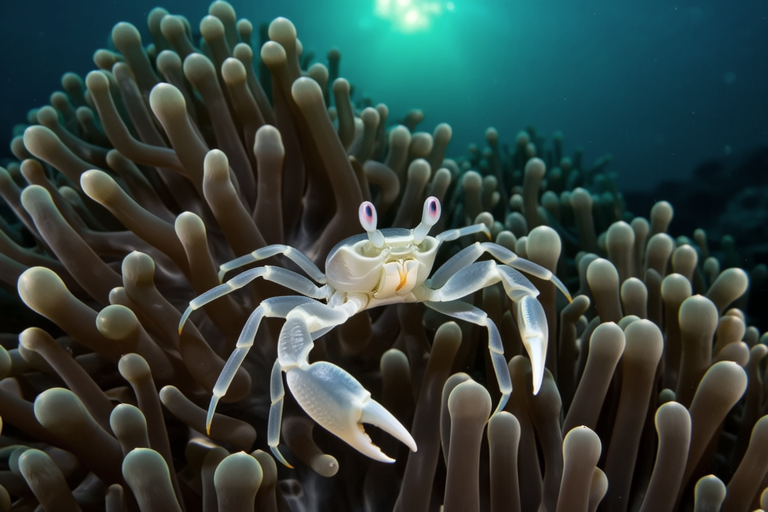
Pea Crabs: The Tiny Marvels of Marine Ecosystems
Welcome to the fascinating world of pea crabs, a group of crustaceans that have captured the imagination of marine biologists and nature enthusiasts alike. These diminutive creatures, barely reaching a few millimeters in size, have evolved an extraordinary life cycle, habitat, and symbiotic relationships that set them apart from their larger crab relatives.
A Unique Life Cycle
The life cycle of pea crabs is as intricate as it is fascinating. Unlike many other crab species, pea crabs exhibit a remarkable adaptation known as parasitism. They begin their lives as tiny larvae, floating freely in the ocean’s currents. Once they find a suitable host, typically a bivalve mollusk such as an oyster or scallop, they enter through the gills or mantle cavity and settle inside. Here, they undergo metamorphosis, transforming into their adult form. This unique lifecycle allows pea crabs to avoid predation during their vulnerable larval stage, significantly increasing their chances of survival.
Habitat and Adaptations
Pea crabs thrive in diverse aquatic habitats, ranging from shallow coastal waters to deep-sea environments. Their microscopic size and ability to fit snugly within their hosts’ bodies provide them with protection from predators and harsh environmental conditions. Additionally, pea crabs possess specialized appendages called setae, which help them cling securely to their hosts’ internal surfaces. This adaptation ensures that they remain safely ensconced even during the host’s movements or feeding activities.
Symbiotic Relationships
The relationship between pea crabs and their hosts is a prime example of mutualism, where both parties benefit. For the pea crabs, the host provides shelter, protection, and a steady supply of food. In return, pea crabs contribute to the health and well-being of their hosts by consuming harmful parasites and detritus, thus promoting the overall cleanliness of the host’s internal environment. This symbiotic partnership has been honed over millions of years, resulting in a delicate balance that benefits both participants.
Recent Scientific Discoveries
In recent years, scientists have made significant strides in understanding the behavior, diet, and ecological roles of pea crabs. Researchers have discovered that pea crabs play a crucial role in nutrient cycling within marine ecosystems. By consuming detritus and other organic matter, they help break down complex compounds into simpler forms that can be utilized by other organisms. This process facilitates the transfer of energy throughout the food web, supporting the overall health and productivity of marine environments.
Another exciting discovery involves the communication methods employed by pea crabs. Studies have revealed that these tiny crustaceans engage in sophisticated signaling behaviors to coordinate their activities within their hosts. Through vibrations and chemical cues, pea crabs communicate with one another, ensuring efficient resource allocation and minimizing competition for limited space and nutrients.
Comparisons with Other Crab Species
While all crabs belong to the same class (Crustacea), the differences between pea crabs and their larger relatives are striking. Unlike traditional crabs, which are free-living and often active predators, pea crabs have adapted to a sedentary lifestyle within their hosts. Their small size and specialized anatomy enable them to thrive in this unique niche, allowing them to coexist harmoniously with their hosts without causing harm.
Moreover, pea crabs lack the powerful claws and pincers characteristic of many other crab species. Instead, they rely on their slender limbs and setae to navigate their confined living spaces. This evolutionary adaptation highlights the versatility and adaptability of crustaceans in response to different ecological pressures.
Benefits to Host Organisms
The presence of pea crabs within their hosts offers numerous advantages. By removing harmful parasites and detritus, pea crabs contribute to the overall health and longevity of their hosts. Furthermore, the gentle cleaning action of pea crabs can stimulate the growth of new tissue in the host, promoting healing and regeneration. This mutually beneficial relationship underscores the importance of biodiversity in maintaining healthy ecosystems.
Conservation Efforts and Challenges
Despite their vital role in marine ecosystems, pea crabs face numerous threats due to human activities and environmental changes. Overfishing, pollution, and habitat destruction pose significant risks to both pea crabs and their hosts. As a result, conservationists are working diligently to protect these tiny creatures and their habitats. Initiatives include the establishment of marine protected areas, the promotion of sustainable fishing practices, and the implementation of stricter regulations on pollutants.
However, conserving pea crabs presents unique challenges. Their microscopic size makes them difficult to study and monitor, complicating efforts to assess population trends and identify potential threats. Additionally, the highly specialized nature of their symbiotic relationships means that any disruption to their hosts could have cascading effects throughout the ecosystem. Addressing these challenges requires innovative approaches and a multidisciplinary approach involving biologists, ecologists, and policymakers.
Conclusion
Pea crabs are truly remarkable creatures, embodying the resilience and adaptability of life in the ocean. Their unique life cycle, habitat, and symbiotic relationships offer valuable insights into the complexity of marine ecosystems. Recent scientific discoveries continue to unravel the mysteries surrounding these tiny marvels, revealing their essential role in nutrient cycling and ecosystem health. As we strive to conserve and protect our oceans, it is crucial that we recognize and appreciate the contributions of pea crabs and other microscopic organisms that play vital roles in maintaining the delicate balance of marine life.