
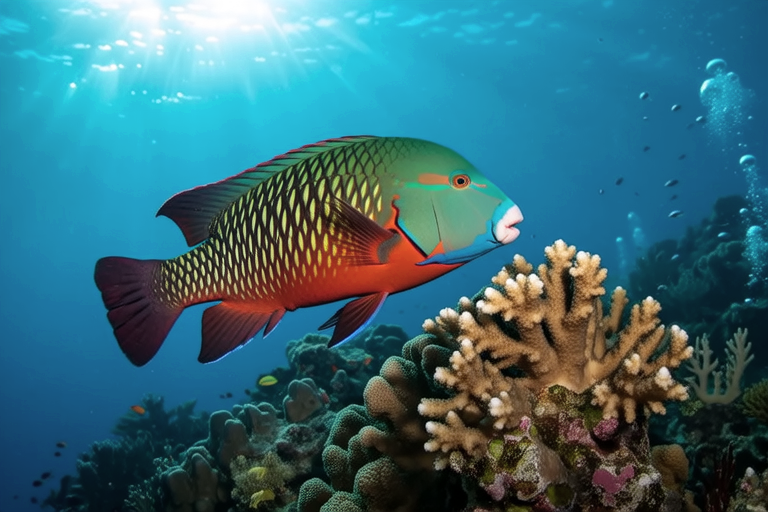
How Parrot Fish Shape Our Oceans, One Bite at Time
In the vast expanse of our oceans, there exists a vibrant community of creatures that play pivotal roles in maintaining the delicate balance of marine ecosystems. Among these, parrot fish stand out as unsung heroes, silently shaping the very reefs they inhabit with each bite they take. These colorful, often flamboyant fish are not just eye-catching diversions for snorkelers and scuba enthusiasts; they are indispensable to the health and survival of coral reefs, which are among the most diverse and vital ecosystems on Earth.
The Grazing Habits of Parrot Fish
Parrot fish are known for their unique feeding behavior, which involves scraping algae off of rocks and corals using their strong beaks. This process is akin to mowing a lawn, where the fish meticulously trim the reef’s surface, removing unwanted algae growth. Their diet primarily consists of various types of algae, but they also consume small organisms living within the reef matrix. This constant grazing not only keeps the algae in check but also helps maintain the structural integrity of the reef.
Their beaks, which can range from small and delicate to large and robust depending on the species, are specifically adapted for this task. Some parrot fish have fused teeth that form a beak-like structure, while others possess a series of plates that act similarly. These adaptations allow them to efficiently scrape away at the reef surface, leaving behind a clean slate for new coral polyps to settle and grow.
The Impact on Algae Growth and Marine Biodiversity
The control of algae growth by parrot fish is crucial for the overall health of coral reefs. If left unchecked, algae can overgrow corals, blocking sunlight and preventing the photosynthesis necessary for coral survival. Overgrown algae can also release toxins that are harmful to other marine life. By keeping algae in check, parrot fish ensure that corals receive sufficient light and space to thrive, thereby promoting the growth of healthy coral colonies.
This, in turn, supports a wide array of marine species that depend on coral reefs for shelter, food, and breeding grounds. The intricate web of life within a coral reef is highly dependent on the presence of healthy corals. Fish, crustaceans, mollusks, and countless other organisms all find refuge and sustenance within these structures. A decline in coral health due to excessive algae growth could lead to a cascade of negative effects throughout the entire ecosystem, potentially resulting in the loss of biodiversity.
Contribution to Calcium Carbonate Production
One of the lesser-known yet significant contributions of parrot fish to coral reefs is their role in the production of calcium carbonate. As they graze, they ingest calcium carbonate from the reef structure itself. After digestion, they excrete it as sand. This process, known as bioerosion, is essential for the maintenance of the reef’s physical structure. The calcium carbonate that parrot fish produce through their waste helps to replenish the substrate on which corals grow, ensuring that the reef remains stable and capable of supporting new coral growth.
The calcium carbonate that accumulates as sand on the ocean floor is also crucial for the formation of new reefs. It provides a foundation for coral larvae to settle upon and grow into mature colonies. Without this continuous cycle of bioerosion and sedimentation, the reefs would gradually degrade, losing their ability to support the diverse array of marine life that depends on them.
Threats to Parrot Fish Populations
Despite their critical role in maintaining coral reef health, parrot fish populations face numerous threats that jeopardize their survival. Overfishing is one of the most pressing issues, as many species of parrot fish are prized for their flesh and are often targeted by commercial fisheries. In some regions, parrot fish are caught using unsustainable methods, leading to declines in their numbers.
Additionally, habitat destruction poses a significant threat. Coastal development, pollution, and climate change all contribute to the degradation of coral reefs, reducing the available habitat for parrot fish. As reefs become less healthy and fragmented, the fish lose both their homes and their primary source of food, further exacerbating population declines.
Broad Implications for Ocean Ecosystems
The decline of parrot fish populations could have far-reaching consequences for ocean ecosystems. With fewer parrot fish to control algae growth, reefs may become overrun with algae, leading to a decrease in coral cover and a reduction in the diversity of marine species that rely on the reefs for survival. This could result in the loss of important fish stocks, impacting local economies that depend on fishing and tourism.
Furthermore, the diminished ability of reefs to produce calcium carbonate could slow down the rate of reef formation and increase the vulnerability of existing reefs to erosion. This would weaken the natural barriers that protect coastal areas from storms and sea level rise, potentially leading to increased flooding and property damage in vulnerable communities.
Conclusion
Parrot fish are more than just beautiful and fascinating creatures; they are vital components of coral reef ecosystems. Their grazing habits help keep algae in check, promote healthy coral growth, and contribute to the production of calcium carbonate, all of which are essential for maintaining the structural integrity and biodiversity of coral reefs. However, the future of these remarkable fish is uncertain, and their decline could have devastating impacts on marine ecosystems worldwide.
To ensure the continued health of our oceans, it is imperative that we take steps to protect parrot fish and the reefs they call home. This includes implementing sustainable fishing practices, reducing pollution, and addressing the root causes of climate change. By doing so, we can help preserve the delicate balance of marine ecosystems and ensure that future generations will continue to benefit from the incredible beauty and bounty of our oceans.