
Parrot Fish: Nature’s Masterpieces in Oceanic Canvases
In the vast and mysterious world beneath the waves, few creatures capture the imagination quite like the parrot fish. These colorful denizens of the deep are not only visually stunning but also play a vital role in maintaining the health of coral reefs. With their vibrant hues and intricate patterns, parrot fish are nature’s own masterpieces, painted onto the ever-changing canvases of the ocean. This article delves into the unique characteristics of these fish, their crucial roles in marine ecosystems, and the fascinating aspects of their lives that make them truly remarkable.
The Unique Characteristics of Parrot Fish
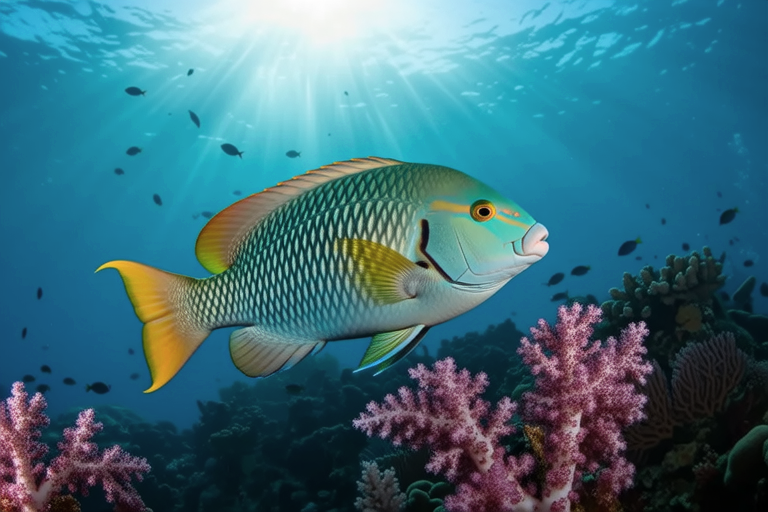
Parrot fish are easily recognizable by their distinct beak-like mouths, which are adapted for grazing on algae and other marine plants. Their bodies are often adorned with a kaleidoscope of colors, from electric blues and greens to fiery oranges and reds. Each species displays its own unique patterns, making them a spectacle to behold. The parrot fish’s ability to change color and pattern based on mood or environment adds another layer of complexity to their already mesmerizing appearance.
One of the most intriguing features of parrot fish is their ability to secrete a mucus cocoon before sleep. This cocoon serves as a protective barrier against predators, enveloping the fish in a soft, silvery sheath that camouflages it from potential threats. This behavior underscores the importance of safety in the underwater world, where even the smallest creature must take precautions.
The Role of Parrot Fish in Coral Reef Ecosystems
Coral reefs are some of the most diverse and productive ecosystems on Earth, and parrot fish are key players in maintaining their health. By grazing on algae, they prevent it from overgrowing and smothering the coral polyps. This act of clearing space allows more sunlight to reach the corals, promoting photosynthesis and overall growth. In essence, parrot fish act as gardeners of the sea, ensuring the continued vitality of these delicate structures.
Parrot fish also contribute to the reef’s structural integrity through their feeding habits. As they bite off pieces of coral to access the algae within, they inadvertently help break down old coral skeletons. This process releases calcium carbonate, which is essential for the formation of new coral structures. Without parrot fish, many coral reefs would likely suffer from stagnation and decay, highlighting the interdependence of marine species.
Vibrant Colors and Patterns: A Living Work of Art
The colors and patterns of parrot fish are nothing short of breathtaking. From the neon green of the stoplight parrotfish to the iridescent blue of the midnight parrotfish, each species offers a unique palette of hues. These colors are not just for show; they serve important functions in communication and camouflage. For instance, bright colors may signal readiness to mate, while more subdued tones can help blend into the background.
Parrot fish also exhibit remarkable adaptability in their appearance. Some species can rapidly change color to match their surroundings, a trait that aids in both predator avoidance and social interactions. Watching these transformations unfold is akin to witnessing a living painting come to life, with each brushstroke adding depth and nuance to the canvas of the ocean.
Feeding Habits: Grazing in the Deep
Parrot fish are primarily herbivores, feeding on algae and other plant matter found on coral reefs. Their beak-like mouths are perfectly suited for scraping algae off rocks and coral surfaces. This specialized diet not only sustains them but also helps regulate the balance of the ecosystem. By controlling algal growth, parrot fish ensure that coral reefs remain healthy and vibrant.
Interestingly, some parrot fish species have been observed using tools to aid in their feeding. For example, certain species will use rocks to crack open shells and access the mollusks inside. This behavior showcases the intelligence and resourcefulness of these fish, further emphasizing their importance in the marine food web.
The Significance of Their Excreted Sand
Perhaps one of the most fascinating aspects of parrot fish is their contribution to the creation of sand. As they consume coral and algae, their digestive systems process these materials, eventually excreting them as fine particles of sand. Over time, this process contributes significantly to the formation of beaches and islands. In fact, it is estimated that a single large parrot fish can produce up to 90 kilograms of sand per year. This remarkable feat highlights the interconnectedness of marine and terrestrial ecosystems.
The sand produced by parrot fish is not only aesthetically pleasing but also plays a critical role in coastal protection. Beaches formed from this sand help buffer coastlines against erosion and storm surges, providing vital protection for both marine and human communities. Thus, the seemingly simple act of defecating becomes a cornerstone of environmental stability.
Conservation and the Future of Parrot Fish
Despite their crucial role in marine ecosystems, parrot fish face numerous threats, including overfishing and habitat destruction. Many species are targeted for their brightly colored flesh, which is highly prized in certain culinary traditions. Additionally, the degradation of coral reefs due to climate change and pollution poses a significant risk to their habitats.
To protect these magnificent creatures, it is essential to promote sustainable fishing practices and support conservation efforts aimed at preserving coral reefs. By raising awareness about the importance of parrot fish and the broader marine environment, we can work towards ensuring their survival for generations to come. Let us strive to be stewards of the ocean, recognizing the invaluable contributions of these living works of art.
Conclusion
Parrot fish are more than just beautiful inhabitants of the ocean; they are vital components of marine ecosystems that deserve our respect and protection. Through their vibrant colors, unique behaviors, and indispensable roles in coral reef maintenance, they paint a vivid picture of life beneath the waves. As we continue to explore and understand the complexities of the underwater world, let us appreciate the artistry of nature and the crucial part played by these magnificent fish.