
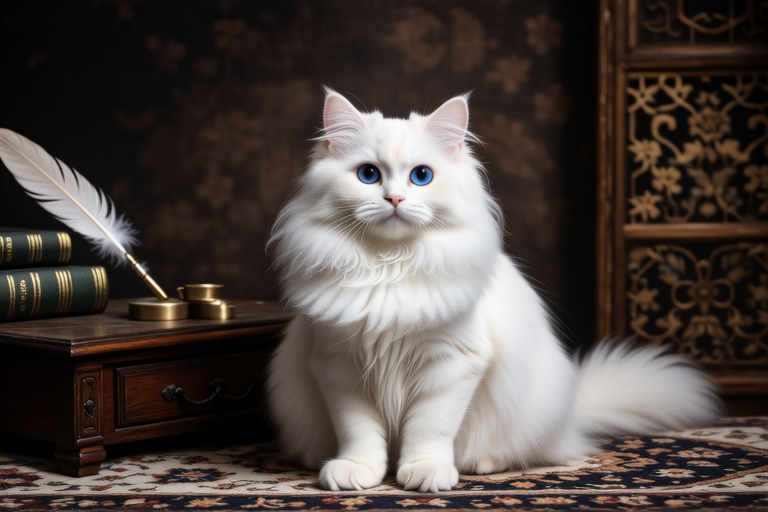
Unraveling the Mystery: The History and Origin of Persian Cats
The Persian cat, with its luxurious coat and striking appearance, has captivated humans for centuries. This breed, known for its serene demeanor and elegant grace, has a rich and storied history that spans continents and millennia. From ancient Persia to modern-day homes, the Persian cat’s journey is one of evolution, adaptation, and enduring popularity. In this article, we will delve into the origins of the Persian cat, tracing its roots back to the cradle of civilization, explore its initial appearances in historical records, and examine the evolution of its distinct features over time.
The Ancient Roots of Persian Cats
The Persian cat’s origin story begins in the vast deserts of ancient Persia, now modern-day Iran. Historians and archaeologists have long debated the exact origins of this regal breed, but it is widely believed that the Persian cat descended from the wildcats of Central Asia. These felines, with their long, flowing coats, were well-suited to the harsh, arid climate of the region. The thick fur provided insulation against the cold desert nights, while their calm and gentle nature made them ideal companions for the nomadic tribes who roamed the area.
The first documented evidence of Persian cats dates back to the 17th century, when they were brought to Europe by traders and diplomats. However, there is speculation that the breed existed much earlier, possibly as far back as the time of the ancient Egyptians. The Egyptians revered all cats, and it is plausible that Persian cats were among the felines worshipped and domesticated in the Nile Valley. While there is no concrete proof of this, the similarities between Persian cats and other Egyptian breeds suggest a shared ancestry.
Initial Appearance in Historical Records
The Persian cat made its first notable appearance in Western history during the reign of Queen Mary II of England in the late 17th century. It was around this time that the breed was introduced to Europe through diplomatic gifts and trade routes. The Persian cat quickly gained favor among European nobility, who were enchanted by its beauty and temperament. These early Persian cats were likely more robust and less refined than the modern versions, with shorter, thicker coats adapted to the colder climates of Persia.
The breed’s popularity grew rapidly, and by the 18th century, Persian cats were being exhibited at cat shows across Europe. The first official cat show was held in London in 1871, and Persian cats were among the featured breeds. This marked the beginning of organized breeding programs, which aimed to refine and standardize the characteristics of the Persian cat.
The Evolution of Distinct Features Over Centuries
The evolution of the Persian cat’s distinct features can be traced through the centuries, as breeders sought to enhance the breed’s aesthetic appeal. One of the most notable changes was the development of the breed’s long, luxurious coat. Early Persian cats had shorter, denser fur, which was better suited to their native environment. As the breed spread to colder regions, the coat lengthened and thickened, becoming the hallmark feature of the modern Persian.
The Persian cat’s large, round eyes and flattened face also developed over time. These traits are the result of selective breeding, where breeders focused on producing cats with exaggerated facial features. While these characteristics contribute to the breed’s distinctive appearance, they have also led to health issues, such as breathing difficulties and dental problems. Modern breeders are working to address these concerns while maintaining the Persian cat’s unique look.
Significant Milestones in Breeding History
The breeding history of Persian cats is marked by several significant milestones, each contributing to the breed’s development and popularity. One of the most important events was the establishment of the Cat Fanciers’ Association (CFA) in 1906. The CFA played a crucial role in standardizing the Persian cat’s breed standards and promoting responsible breeding practices. The association continues to play a vital role in the preservation and improvement of the breed today.
In the mid-20th century, the introduction of the Himalayan cat further enriched the Persian breed. The Himalayan cat is a crossbreed between the Persian and the Siamese, resulting in a cat with the Persian’s long coat and the Siamese’s colorpoint pattern. This hybridization added new colors and patterns to the Persian breed, increasing its diversity and appeal. Today, the CFA recognizes several color variations within the Persian breed, including solid colors, bicolors, and tabbies.
Becoming Popular Worldwide
The Persian cat’s rise to global popularity can be attributed to its striking appearance and gentle temperament. Throughout the 20th century, Persian cats became fixtures in the homes of celebrities and dignitaries, further enhancing their status as luxury pets. The breed’s popularity was also boosted by its frequent appearances in advertising campaigns and media. Persian cats have been featured in commercials, movies, and television shows, cementing their place in popular culture.
Today, Persian cats are one of the most popular cat breeds worldwide, with millions of devoted fans. Their enduring appeal lies in their elegance, intelligence, and affectionate nature. Persian cats are known for their calm and gentle demeanor, making them ideal companions for families and individuals alike. Their loyalty and devotion to their owners have earned them a reputation as one of the most beloved cat breeds.
Changes in Physical Characteristics Due to Selective Breeding
Selective breeding has played a significant role in shaping the Persian cat’s physical characteristics over the years. Breeders have focused on enhancing the breed’s distinctive features, such as its long, flowing coat and flattened face. However, this emphasis on aesthetics has come at a cost, leading to health issues such as respiratory problems and dental disease. Modern breeders are increasingly prioritizing health and well-being, working to improve the breed’s genetic diversity and reduce the incidence of hereditary conditions.
One of the most notable changes in recent years has been the introduction of the “doll face” Persian, a variation of the breed with a less exaggerated facial structure. This newer version retains the Persian’s signature coat and eye shape while minimizing the health risks associated with extreme facial flattening. The doll face Persian has gained popularity among breeders and cat enthusiasts, offering a healthier alternative to the traditional Persian.
Notable Mentions in Literature and Art
Persian cats have been celebrated in literature and art for centuries, appearing in works ranging from ancient manuscripts to modern novels. One of the earliest references to Persian cats in literature can be found in the writings of Persian poet Rumi, who lived in the 13th century. Rumi often used animals, including cats, in his poetry to illustrate spiritual themes and moral lessons. His fondness for cats is evident in his descriptions of their grace and wisdom, qualities he admired in both cats and humans.
Persian cats have also been immortalized in art, appearing in paintings and sculptures throughout history. One of the most famous depictions of a Persian cat is the painting “The Cheshire Cat,” created by British artist John Tenniel in the 19th century. While the Cheshire Cat is not a Persian, Tenniel’s portrayal of the character’s wide, expressive eyes and gentle smile bears a striking resemblance to the breed. Another notable example is the sculpture “Le Chat Persan,” created by French artist Auguste Rodin in the early 20th century. This bronze statue captures the essence of the Persian cat’s elegance and poise.
More recently, Persian cats have appeared in contemporary literature, including the best-selling novel “The Cat in the Hat Comes Back” by Dr. Seuss. While the titular character is not a Persian, the book’s illustrations feature several Persian-like cats, adding to the breed’s cultural significance. Persian cats have also been featured in children’s books, graphic novels, and young adult fiction, appealing to readers of all ages.
Conclusion
The Persian cat’s journey from the deserts of ancient Persia to the living rooms of modern-day homes is a testament to its enduring appeal and adaptability. From its humble beginnings as a companion to nomadic tribes to its current status as a beloved pet and cultural icon, the Persian cat has left an indelible mark on human history. Its evolution over the centuries, shaped by selective breeding and cultural influences, has resulted in a breed that is both beautiful and beloved. As we continue to celebrate and care for these magnificent creatures, we honor their legacy and ensure their place in our hearts for generations to come.