
Heterometrus spinifer: The Enigmatic Scorpion of Southeast Asia
The Heterometrus spinifer, commonly known as the spiny forest scorpion, is a captivating member of the scorpion family (Scorpionidae) that has garnered significant attention on social media platforms. This elusive arachnid, native to the tropical forests of Southeast Asia, is distinguished by its striking appearance and intriguing behaviors. With its distinctive physical features, unique habitat preferences, and an array of fascinating habits, the Heterometrus spinifer has become a subject of fascination for both enthusiasts and casual observers alike.
Physical Characteristics
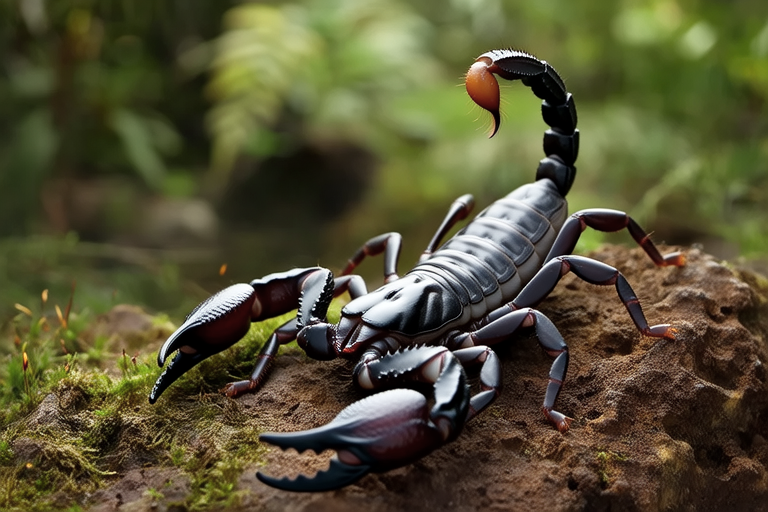
The Heterometrus spinifer is easily recognizable due to its robust body structure and prominent spines along its tail, which serve as defensive mechanisms against predators. Adult specimens typically measure between 7 to 10 centimeters in length, with males being slightly larger than females. Their coloration ranges from dark brown to black, providing excellent camouflage in their natural environment. The most notable feature of this species is the presence of sharp, pointed spines located on the metasoma (tail), which can be raised when threatened to deter potential attackers. These spines are not venomous but act as formidable deterrents.
In addition to these defensive adaptations, the Heterometrus spinifer possesses large pincers (pedipalps) used for grasping prey and sensing their surroundings. The eyes are also well-developed, allowing them to navigate through dimly lit environments efficiently. The overall appearance of this scorpion is both intimidating and graceful, making it a visually striking creature.
Habitat and Behavior
Native to the dense tropical rainforests of Southeast Asia, particularly in countries like Thailand, Malaysia, and Indonesia, the Heterometrus spinifer thrives in humid conditions where temperatures remain consistently warm throughout the year. They prefer living under rocks, logs, or in crevices within tree trunks, where they can remain hidden during daylight hours and emerge at night to hunt. These nocturnal creatures are solitary animals, only coming together during mating season.
The diet of the Heterometrus spinifer consists mainly of insects and other small invertebrates found within its habitat. Using their keen senses and powerful pincers, they are adept hunters capable of capturing prey much larger than themselves. Despite their fearsome reputation, these scorpions pose little threat to humans unless provoked. Their venom, while potent enough to immobilize their prey, is generally harmless to people unless one suffers from an allergic reaction.
Social Media Popularity
The rise of social media platforms has played a significant role in increasing public awareness and interest in the Heterometrus spinifer. Videos showcasing the scorpion’s unique behaviors, such as its defensive posture or hunting techniques, have gone viral, captivating audiences worldwide. One particular story that gained widespread attention was a video of a Heterometrus spinifer being rescued from a house after accidentally entering through an open window. The gentle handling of the creature by rescuers demonstrated the importance of respecting wildlife and handling situations calmly.
Another factor contributing to the popularity of the Heterometrus spinifer on social media is its appearance in various documentaries and nature shows. These programs often highlight the ecological significance of such species within their ecosystems, emphasizing the need for conservation efforts to protect them from extinction.
Scientific Classification and Lifecycle
Belonging to the order Scorpiones, the Heterometrus spinifer falls under the family Scorpionidae, which comprises over 2400 described species worldwide. Within this family, it belongs to the genus Heterometrus, named after its characteristic heteromorphic claws (pedipalps). The specific epithet “spinifer” refers to the spines present on its tail, further distinguishing it from other members of its genus.
The lifecycle of the Heterometrus spinifer begins with mating, which occurs primarily during the rainy season when environmental conditions are favorable. After successful copulation, the female carries fertilized eggs internally until they hatch into tiny scorplings. Once born, these young scorpions remain attached to their mother’s back for several days before dispersing to lead independent lives. As they grow, they undergo a series of molts, shedding their exoskeletons multiple times until reaching adulthood.
Conservation Status and Threats
Despite its widespread distribution across Southeast Asia, the Heterometrus spinifer faces numerous threats in the wild, primarily stemming from habitat destruction caused by deforestation and urbanization. Logging activities and agricultural expansion have led to fragmentation of suitable habitats, reducing available resources for these scorpions. Additionally, climate change poses another challenge, altering rainfall patterns and temperature regimes that may impact breeding success rates.
To address these concerns, several organizations are working towards protecting the Heterometrus spinifer and its ecosystem. Conservation initiatives focus on promoting sustainable land use practices, reforestation projects, and raising awareness among local communities about the importance of preserving biodiversity. While there is currently no official conservation status assigned to this species, continued monitoring is essential to ensure its long-term survival.
Conclusion
The Heterometrus spinifer stands out as an extraordinary example of nature’s diversity, offering valuable insights into the intricate relationships between organisms within their ecosystems. By learning more about this enigmatic creature and appreciating its role in maintaining balance within its environment, we can foster greater respect for all forms of life. Encouraging responsible tourism practices, supporting conservation efforts, and educating others about the wonders of the natural world will help secure a future where such marvels continue to thrive.