
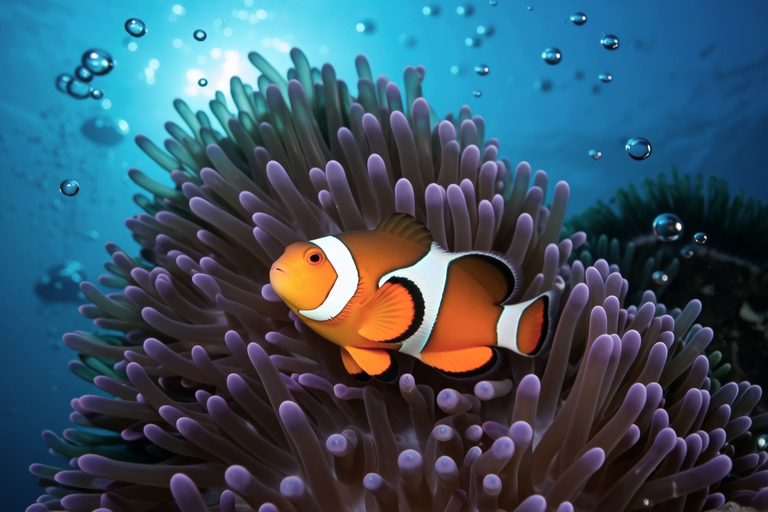
How Clownfish Survive and Thrive in Their Host Anemones
The vibrant world of marine life is filled with countless examples of symbiotic relationships, where two different species coexist in a mutually beneficial manner. One of the most fascinating and well-known partnerships is that between the clownfish and its host anemone. This article delves into the intricate details of how these small, colorful fish manage to survive and thrive in the midst of potentially deadly tentacles. We will explore the unique adaptations that allow clownfish to live alongside their host, the mutual benefits of this relationship, and the behaviors that enhance their survival within the anemone.
The Symbiotic Relationship
The relationship between clownfish and anemones is an example of mutualism, where both parties benefit from the association. For the anemone, the clownfish provides protection from predators and parasites, while the clownfish receives shelter and food. The clownfish’s bright colors serve as a warning to potential predators, signaling the presence of the anemone’s potent stinging cells, known as nematocysts. This relationship is so successful that it has evolved over millions of years, resulting in a highly specialized interaction.
Protection from Nematocysts
One of the most remarkable aspects of this partnership is the way clownfish protect themselves from the anemone’s stinging cells. Unlike other fish, clownfish have developed a thick mucus layer on their skin, which acts as a barrier against the nematocysts. This mucus is thought to be produced by the anemone itself, and it is believed that the clownfish acclimates to the anemone’s environment over time, allowing them to develop this protective layer. Additionally, clownfish have adapted their behavior to avoid triggering the nematocysts. They move slowly and carefully around the anemone, ensuring they do not disturb the delicate tentacles.
Mutual Benefits
The mutual benefits of this relationship are numerous and vital for both species. For the anemone, the clownfish acts as a guardian, driving away potential predators such as butterflyfish, which feed on anemones. The clownfish also helps to remove debris and waste from the anemone, keeping it clean and healthy. In return, the anemone provides the clownfish with a safe haven from larger predators, as well as a steady supply of food. The tentacles of the anemone can capture small fish and plankton, which the clownfish can then consume. This ensures that the clownfish always has access to a reliable food source, even during periods of scarcity.
Adaptations for Survival
Clownfish have several adaptations that enhance their survival within the host anemones. One of the most important is their ability to change sex. Clownfish are born as males, but if the dominant female dies, the largest male in the group can transform into a female. This ensures that the anemone always has a breeding pair, maximizing the chances of successful reproduction. Another adaptation is their unique swimming pattern, which allows them to navigate the complex structure of the anemone without getting entangled in the tentacles. This efficient movement pattern helps the clownfish find food and avoid predators more effectively.
Behavioral Adaptations
In addition to physical adaptations, clownfish exhibit specific behaviors that enhance their survival within the anemone. One of the most notable behaviors is the way they care for their eggs. After mating, the male clownfish takes responsibility for guarding the eggs until they hatch. He fans the eggs with his fins to provide oxygen and keeps them free from debris. This level of parental care increases the chances of offspring survival, contributing to the overall health of the clownfish population. Another behavior is the way clownfish establish a territory within the anemone. By marking their space with pheromones, they deter other clownfish from entering their area, reducing competition for resources and ensuring that they have enough food and shelter.
The Role of Anemones
Anemones play a crucial role in the survival of clownfish, providing not only shelter but also a stable environment. Anemones are sessile organisms, meaning they are fixed in one place, which makes them ideal hosts for clownfish. The tentacles of the anemone create a protective barrier around the clownfish, deterring predators and creating a safe space for the fish to thrive. Additionally, anemones are capable of photosynthesis, producing energy through sunlight. This energy production supports the growth of zooxanthellae, tiny algae that live inside the anemone’s tissues. These algae produce oxygen and sugars, which the anemone uses for energy. In turn, the clownfish help to aerate the water around the anemone, facilitating the process of photosynthesis.
Challenges and Threats
Despite the many benefits of this relationship, clownfish and anemones face several challenges and threats. One of the most significant threats is climate change, which affects ocean temperatures and acidity levels. Rising temperatures can cause coral reefs, where many anemones live, to bleach and die. This not only reduces the habitat available for anemones but also affects the clownfish population. Increased acidity levels can also harm the anemones’ ability to produce their protective mucus, making them more vulnerable to predators. Pollution and overfishing are additional threats that can disrupt the delicate balance of the marine ecosystem, impacting both clownfish and anemones.
Conclusion
The symbiotic relationship between clownfish and anemones is a prime example of the intricate and complex interactions that occur within the marine environment. Through their unique adaptations and behaviors, clownfish have managed to survive and thrive in the potentially dangerous environment of their host anemones. This relationship highlights the importance of understanding and protecting marine ecosystems, ensuring that these fascinating creatures continue to flourish for generations to come.