
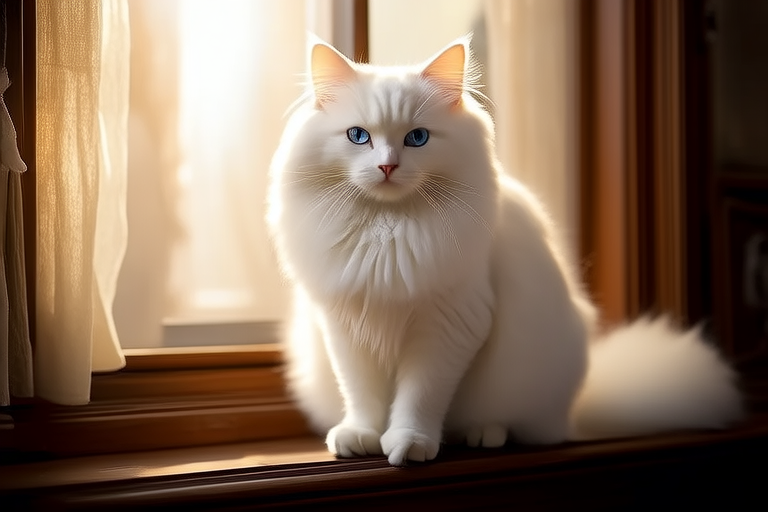
Purrfectly Stunning: Unveiling the Mystery Behind the Turkish Angora
The Turkish Angora, a regal and elegant feline, has captivated the hearts of cat enthusiasts for centuries. With its luxurious white coat, striking blue eyes, and graceful demeanor, this breed exudes an air of mystery and charm that is hard to resist. In this article, we will delve into the fascinating history of the Turkish Angora, explore its distinctive physical traits, discuss its personality, and examine its role in literature and art. Additionally, we’ll provide essential care tips and highlight unique health considerations for those considering adopting this magnificent breed.
A Historical Tapestry
The origins of the Turkish Angora trace back to the heart of Asia Minor, where it has been a cherished companion for millennia. Legend has it that these cats were revered by the ancient Turks, who believed they possessed magical powers. The breed’s name reflects its geographical roots, with “Angora” referring to the former name of Ankara, the capital city of modern-day Turkey. The Turkish Angora was first introduced to Europe in the 16th century and quickly became a favorite among nobility, thanks to its stunning appearance and gentle nature.
Historically, the Turkish Angora played a significant role in the development of other breeds, such as the Persian and the Chinchilla Longhair. Its influence can be seen in the elegant lines and silky coats of these cats. During the 17th century, the Turkish Angora was also highly prized by European royalty, including Queen Victoria, who owned several of these exquisite felines.
Distinctive Physical Traits
The Turkish Angora is a medium-sized cat with a slender yet muscular build. Males typically weigh between 8 and 12 pounds, while females range from 6 to 9 pounds. Their most striking feature is their long, silky coat, which comes in a variety of colors but is most commonly white. The coat is fine and glossy, with minimal undercoat, making it less prone to matting than other long-haired breeds. This characteristic also means that Turkish Angoras require less frequent grooming compared to some of their long-haired counterparts.
One of the most iconic features of the Turkish Angora is its piercing blue eyes, which often contrast beautifully with their snow-white fur. However, it’s worth noting that the breed can also have green or amber eyes, or even heterochromia, where each eye is a different color. These unique eye colors add to the breed’s allure and make each Turkish Angora truly one-of-a-kind.
Personality and Temperament
Besides their striking appearance, Turkish Angoras are known for their playful and affectionate personalities. They are highly intelligent and curious, often engaging in interactive play with their owners. These cats thrive on attention and companionship, making them excellent pets for families or individuals looking for a close bond with their feline friend. Despite their elegant appearance, Turkish Angoras are quite active and enjoy climbing, jumping, and exploring their surroundings.
One of the most endearing qualities of the Turkish Angora is its vocal nature. While not as talkative as some other breeds, they are known to communicate with soft chirps and trills. They are also very social and enjoy being involved in family activities. Turkish Angoras are generally good with children and other pets, provided they are properly introduced and socialized from a young age.
In Literature and Art
The Turkish Angora has inspired many artists and writers over the years. In literature, the breed has been mentioned in various works, often symbolizing elegance and grace. For example, in Edith Wharton’s novel “The Custom of the Country,” the protagonist, Undine Spragg, is described as having a “Turkish Angora-like” presence, highlighting her beauty and charm. Similarly, in the classic tale “The Cat and the Canary,” the Turkish Angora serves as a symbol of mystery and intrigue.
In the world of art, Turkish Angoras have been featured in numerous paintings and sculptures. Their striking appearance and regal bearing make them ideal subjects for artists seeking to capture elegance and refinement. One notable example is the painting “Turkish Angora” by French artist Jean-Léon Gérôme, which showcases the breed’s sleek lines and expressive eyes. Such artworks continue to inspire admiration for the Turkish Angora, cementing its status as a symbol of beauty and sophistication.
Care Tips for Potential Owners
Owning a Turkish Angora can be a rewarding experience, but it requires commitment and proper care. Here are some essential tips for potential owners:
- Grooming: Regular brushing is necessary to prevent matting and keep their coat healthy and shiny. Use a soft-bristle brush or a slicker brush to remove loose hair and distribute natural oils throughout the coat.
- Diet: Provide a balanced diet rich in proteins, vitamins, and minerals to support their overall health. Consult with your veterinarian to determine the best food options for your Turkish Angora.
- Exercise: Encourage physical activity through interactive toys and playtime. Turkish Angoras enjoy climbing and playing, so providing them with scratching posts, perches, and puzzle toys can help keep them entertained and physically fit.
- Veterinary Care: Schedule regular check-ups with your veterinarian to ensure your cat remains healthy. Keep up-to-date with vaccinations and preventive treatments for fleas, ticks, and worms.
Unique Health Considerations
While Turkish Angoras are generally healthy cats, there are some unique health considerations to be aware of:
- Hypertrophic Cardiomyopathy (HCM): This condition affects the heart muscle, causing it to thicken and potentially leading to heart failure. Genetic testing is available to identify carriers of the gene responsible for HCM, allowing breeders to make informed decisions about breeding pairs.
- Deafness: Some Turkish Angoras may be born deaf, particularly those with white coats and blue eyes. Early detection and management strategies can help ensure these cats lead full and happy lives.
- Dermatitis: Due to their fine coats, Turkish Angoras may be more susceptible to skin irritations and allergies. Regular grooming and monitoring for signs of discomfort can help manage this issue.
By understanding these potential health concerns, owners can take proactive steps to ensure their Turkish Angora remains healthy and vibrant.
Conclusion
The Turkish Angora is a breed steeped in history, beauty, and grace. From its origins in ancient Turkey to its prominence in European courts, this cat has left an indelible mark on human culture. Its distinctive physical traits, combined with its loving and playful personality, make it a cherished companion for many. Whether you’re a seasoned cat enthusiast or simply looking for a new furry friend, the Turkish Angora offers a unique blend of elegance and charm that is sure to enchant. By providing proper care and attention, you can ensure your Turkish Angora leads a happy and healthy life, adding countless purrs and moments of joy to your home.