
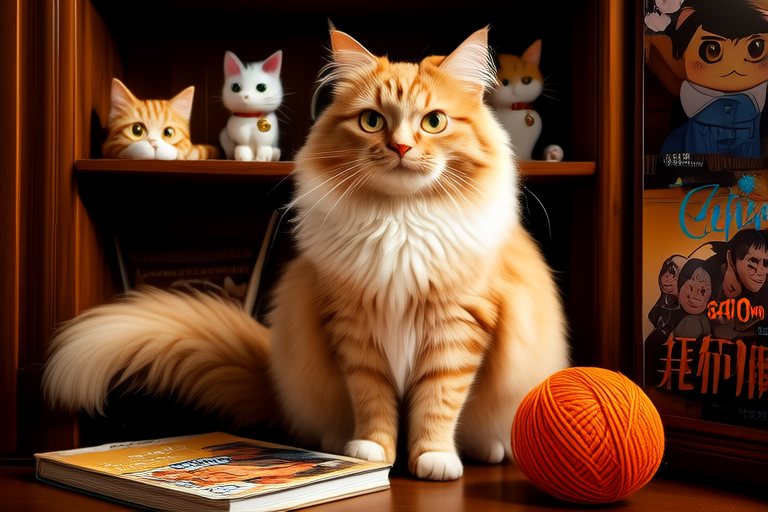
Orange Cats in Popular Culture: From Media to Internet Fame
The representation of orange cats in popular culture has evolved significantly over time, culminating in their rise to internet fame. This article explores the historical context of orange cats in media, specific examples from movies, TV shows, and literature, and the reasons behind their popularity online. It also analyzes the impact of social media platforms on boosting their visibility and highlights notable orange cat influencers. Finally, it concludes with insights into how this trend reflects broader cultural attitudes towards pets and the internet.
Historical Context of Orange Cats in Media
Orange cats have been featured in various forms of media for centuries, often symbolizing warmth, friendliness, and playfulness. In ancient Egypt, cats were revered as sacred animals, and many depictions of feline deities like Bastet portrayed them with a golden hue, possibly inspired by the sun’s radiance. During the Middle Ages, orange cats were frequently depicted in European art, sometimes serving as symbols of prosperity or fertility. These early representations laid the groundwork for the positive associations that would later become more pronounced in modern media.
Specific Examples of Famous Orange Cats from Movies, TV Shows, and Literature
Movies and TV Shows
One of the most iconic orange cats in film history is Cheshire Cat from Lewis Carroll’s “Alice’s Adventures in Wonderland.” Animated for Disney’s 1951 adaptation, this character is known for its mischievous grin and ability to disappear at will. The Cheshire Cat’s portrayal in the movie has influenced countless interpretations of the character in subsequent adaptations and other media.
In television, Garfield, created by Jim Davis, is perhaps the most recognizable orange cat. First appearing in 1978, Garfield quickly became a beloved cartoon character known for his love of lasagna and disdain for Mondays. His appearances in comic strips, animated series, and live-action films have made him a household name, contributing to the widespread recognition of orange cats in popular culture.
Literature
Orange cats also hold a significant place in literature. In addition to Alice’s Adventures in Wonderland, orange cats appear in works like T.S. Eliot’s “Old Possum’s Book of Practical Cats,” where the character Mungojerrie is described as having a bright orange coat. Another notable example is the orange cat in C.S. Lewis’s “The Chronicles of Narnia,” who plays a crucial role in guiding Lucy Pevensie through the wardrobe and into the magical land of Narnia.
Reasons Behind Their Popularity Online
The physical traits and personality stereotypes associated with orange cats contribute significantly to their popularity online. Physically, orange cats tend to have a distinctive appearance, with their coats ranging from light cream to deep copper tones. This unique coloring sets them apart from other cat breeds, making them easily identifiable and visually appealing.
Culturally, orange cats are often perceived as friendly, playful, and independent. These personality traits resonate well with internet audiences, who frequently seek entertainment and companionship through social media platforms. The combination of striking visuals and relatable personalities makes orange cats particularly attractive as subjects for viral content.
Impact of Social Media Platforms on Boosting Their Visibility
The rise of social media platforms has played a pivotal role in elevating the profile of orange cats. Instagram, Twitter, and TikTok have provided a fertile ground for sharing cat-related content, allowing users to showcase their pets’ antics and charm millions of followers worldwide. Hashtags like #orangecats and #catsofinstagram help organize and promote posts featuring these felines, facilitating engagement and community building.
Moreover, social media algorithms prioritize content that generates high levels of interaction, such as likes, comments, and shares. As a result, posts featuring orange cats often receive significant attention, further amplifying their presence online. Influencers and celebrities have also capitalized on this trend by adopting and promoting orange cats, thereby increasing their visibility even further.
Notable Orange Cat Influencers and Their Contributions
Several notable orange cat influencers have emerged as prominent figures within online communities. Grumpy Cat, whose real name is Tardar Sauce, gained immense popularity after her grumpy facial expression went viral on Reddit in 2012. Since then, she has appeared in numerous advertisements, authored several books, and starred in her own web series. Grumpy Cat’s success demonstrates the potential for individual orange cats to achieve widespread recognition and influence.
Another influential orange cat is Lil BUB, born with several congenital disorders but renowned for her unique appearance and cheerful demeanor. Lil BUB has amassed a large following on social media, where she shares updates about her daily life and advocates for animal welfare causes. Her story serves as an inspiration to many, highlighting the resilience and adaptability of orange cats.
Insights on How This Trend Reflects Broader Cultural Attitudes Towards Pets and the Internet
The growing popularity of orange cats online reflects broader cultural attitudes towards pets and the internet. As people increasingly turn to social media for entertainment, connection, and self-expression, pets—particularly cats—have become central figures in this digital landscape. The trend underscores the importance of visual appeal and relatability in shaping public perception and fostering emotional connections.
Furthermore, the prominence of orange cats in popular culture highlights the significance of representation and diversity in media. By showcasing a wide range of feline characters, including those with distinct physical traits and personalities, creators can enrich storytelling and cater to diverse audiences. This inclusivity contributes to a more nuanced and comprehensive portrayal of pets in modern society.
In conclusion, the representation of orange cats in popular culture, from historical depictions to their current status as internet sensations, reflects evolving societal values and preferences. As social media continues to shape our interactions and perceptions, the role of orange cats in this dynamic environment will likely persist, offering both entertainment and inspiration to millions of fans around the world.