
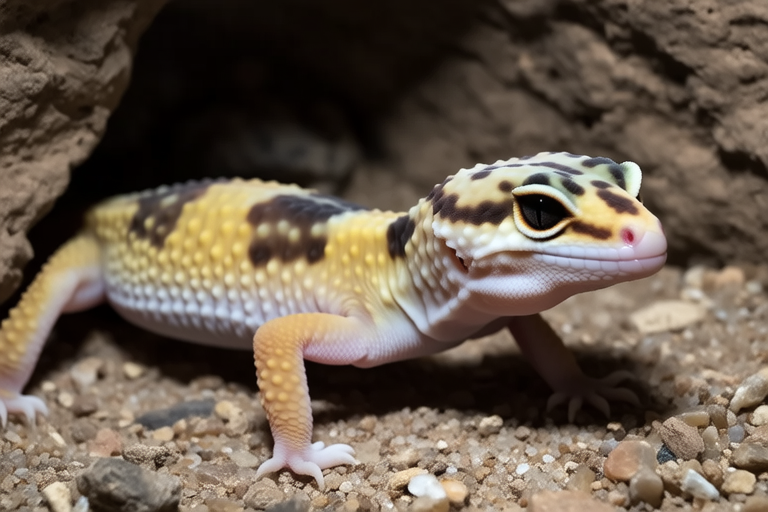
From Tiny Hatchling to Majestic Adult: The Journey of a Leopard Gecko
The journey from a tiny, vulnerable hatchling to a fully grown, majestic adult is nothing short of remarkable for a leopard gecko. This article will take you through every stage of a leopard gecko’s life, offering insights into its growth, development, and care requirements. Whether you’re a seasoned reptile enthusiast or a curious novice, this comprehensive guide promises to captivate and educate.
The Birth of a Leopard Gecko
The life of a leopard gecko begins with its birth. These small reptiles are typically born during the night, emerging from their eggs after approximately 45 days of incubation. A newly hatched leopard gecko is incredibly tiny, measuring around 3 to 4 inches (7.6 to 10 cm) in length. Their weight is minimal, usually less than 0.2 ounces (5 grams).
Upon hatching, these tiny creatures are fully formed, with distinct patterns that already resemble those of their adult counterparts. Their skin is soft and delicate, making them highly susceptible to injuries. Their eyes are wide open, providing them with immediate vision, which is crucial for survival. Their coloration is often a lighter version of what they will grow into, featuring shades of yellow, brown, and black. The spots on their bodies are faint but visible, hinting at the intricate patterns that will develop over time.
Behaviorally, hatchlings are naturally cautious and secretive. They spend much of their time hiding, seeking shelter under leaves, rocks, or any other available cover. This instinctive behavior serves as protection against predators in their natural habitat. Despite their small size, they are surprisingly active, constantly exploring their surroundings to find food and secure their place in the environment.
Early Development: Growth and Adaptations
The first few weeks post-hatching are critical for a leopard gecko’s development. During this period, the hatchling undergoes significant physical and behavioral changes. One of the most notable milestones is the shedding of their skin. Leopard geckos shed their skin in one piece, a process that helps them grow and replace damaged skin. This initial shed is particularly important as it removes the remnants of the egg sac and any potential infections.
Another fascinating adaptation is the ability to regenerate their tails. If threatened, a hatchling leopard gecko can detach its tail as a defense mechanism. While this might seem detrimental, the tail will eventually regenerate, although the new one may not be identical to the original in terms of pattern and length.
Dietary changes also play a pivotal role in the early development of a leopard gecko. Initially, they feed on small insects like fruit flies and pinhead crickets. As they grow, their diet expands to include larger prey items such as dubia roaches and mealworms. Ensuring a varied and nutritious diet is essential for their health and growth. Calcium and vitamin D3 supplements are especially important during this stage to support bone development and overall health.
Growth Process: Key Milestones
The transition from a hatchling to a juvenile is marked by several significant milestones. By the time a leopard gecko reaches juvenile status, it has grown to about 5 to 8 inches (12.7 to 20.3 cm) in length. Juveniles exhibit more confident behavior, venturing further from their hiding spots to explore and hunt for food. They are also more interactive with their environment, climbing and investigating various surfaces.
During this phase, regular shedding continues to occur, allowing the gecko to grow. The frequency of shedding decreases as the gecko matures. Additionally, juveniles may experience a second round of tail regeneration if they lose it again. Each regeneration can result in a slightly different tail shape and pattern.
Environmental needs also evolve during this stage. Juvenile leopard geckos require a warm basking area, ideally maintained at 90°F (32°C), and a cooler side of the enclosure at 75°F (24°C). Proper humidity levels are crucial, with a range of 30% to 40% being ideal. Providing a shallow water dish and a variety of hides and climbing structures enriches their habitat, promoting healthy growth and well-being.
Moving Toward Adulthood
The journey towards adulthood is characterized by further growth and maturation. Adult leopard geckos can reach lengths of up to 10 inches (25 cm) and weigh between 40 to 80 grams. At this stage, they have fully developed their characteristic patterns, which can include spots, stripes, and blotches, depending on their specific breed or morph.
Behaviorally, adult leopard geckos become more independent and territorial. They establish their own territories within the enclosure, marking them with scent glands located near their cloaca. Males, in particular, can become aggressive towards each other and should not be housed together unless in a large enough space to prevent conflicts. Females, while generally less aggressive, still require adequate space to ensure comfort.
The care requirements for adult leopard geckos also change. They need a stable temperature gradient, with a basking spot at 90°F (32°C) and a cool end at 75°F (24°C). Humidity should remain consistent at 30% to 40%. Regular feeding remains crucial, with a focus on high-quality insects such as dubia roaches, superworms, and appropriately sized crickets. Gut-loading these insects with nutritious foods enhances the nutritional value of the prey.
Reaching Adulthood: Full-Grown Characteristics and Care
As a leopard gecko reaches adulthood, it exhibits a range of full-grown characteristics. Their bodies are robust and muscular, with a sleek appearance that reflects their mature status. Their skin is smoother and more resilient, having undergone numerous sheds throughout their lives. The patterns on their bodies are vivid and distinctive, showcasing the unique traits that define their breed or morph.
Adult leopard geckos are highly efficient hunters, utilizing their keen senses of sight, smell, and hearing to locate prey. They are nocturnal animals, active primarily during the evening and nighttime hours. Their agility and speed make them formidable predators in their enclosures, capable of capturing and consuming a wide range of insect prey.
Caring for an adult leopard gecko involves maintaining a clean and stimulating environment. Regular cleaning of the enclosure, including substrate and accessories, is necessary to prevent the buildup of bacteria and parasites. Providing a balanced diet and ensuring access to fresh water are fundamental aspects of their care. Additionally, monitoring their health regularly, watching for signs of illness or injury, is crucial for their longevity.
In conclusion, the journey from a tiny hatchling to a majestic adult is a testament to the resilience and adaptability of leopard geckos. Understanding the different stages of their life and the specific care requirements at each stage is vital for their well-being. Whether you’re a novice or an experienced reptile enthusiast, nurturing a leopard gecko from birth to adulthood offers a rewarding and fascinating experience.