
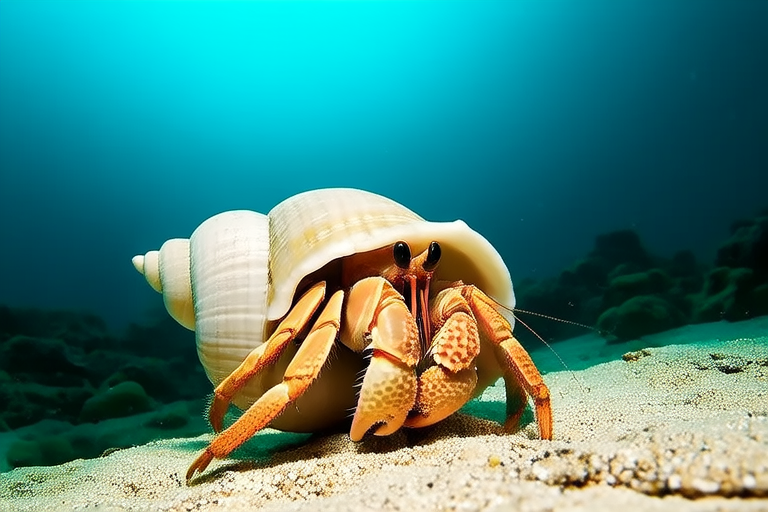
The Surprising Role of Pea Crabs in Marine Ecosystems
In the vast and complex world of marine life, some creatures are so small and inconspicuous that they easily go unnoticed. One such group is the pea crabs, a family of tiny crustaceans known for their diminutive size and unique lifestyle. These crabs, which rarely exceed a few centimeters in length, have adapted to live inside the bodies of other marine organisms, creating fascinating symbiotic relationships that play a crucial role in maintaining the balance of marine ecosystems.
Pea Crabs: A Brief Introduction
Pea crabs, belonging to the superfamily Pinnotheroidea, are characterized by their minute size and their peculiar habit of living as endoparasites or commensals within the bodies of other marine animals. Their hosts can range from bivalves like clams and oysters to echinoderms such as sea cucumbers and even barnacles. This unique living arrangement allows them to benefit from the protection and resources provided by their hosts, while also influencing the host’s well-being in various ways.
Symbiotic Relationships: Coexisting with Sea Cucumbers, Barnacles, and Mollusks
The relationship between pea crabs and their hosts is often described as commensalism, where one species benefits without significantly affecting the other. However, this simplistic view does not fully capture the complexity of these interactions. Recent studies have shown that pea crabs can play a more active role in their host’s environment, sometimes even influencing the host’s behavior and physiology.
For instance, pea crabs that reside within sea cucumbers have been observed to enhance the host’s reproductive success. By consuming parasites that might otherwise harm the sea cucumber, the crabs indirectly protect their host, ensuring better survival rates. Similarly, pea crabs found in barnacles have been seen to aid in the cleaning process of their hosts, removing debris and harmful microorganisms that could hinder the barnacle’s ability to filter feed effectively.
In the case of mollusks, such as clams and oysters, pea crabs have been found to contribute to the regulation of the host’s population. By feeding on the host’s gametes, they reduce the number of offspring produced, which helps prevent overpopulation and maintains a balanced ecosystem. This interaction highlights the intricate web of dependencies that exists within marine environments.
Ecological Benefits: Enhancing Host Survival and Nutrient Cycling
The symbiotic relationships established by pea crabs offer numerous ecological benefits that extend beyond the immediate welfare of their hosts. One of the most significant advantages is the enhancement of host survival rates. By providing protection against predators and parasitic infections, pea crabs increase the longevity and reproductive success of their hosts, contributing to the overall stability of marine populations.
Additionally, these crabs play a vital role in nutrient cycling within marine environments. As they consume detritus and organic matter within their hosts, they help break down nutrients into forms that are more readily available to other organisms. This process facilitates the flow of energy through the food chain, supporting the growth and development of various marine species.
Recent scientific findings have further illuminated the importance of pea crabs in maintaining biodiversity. Studies conducted in coastal waters have shown that areas with higher concentrations of pea crabs exhibit greater species richness and healthier ecosystems. This suggests that the presence of pea crabs may act as an indicator of a robust and resilient marine environment.
Scientific Insights: Shedding Light on Their Role in Biodiversity
The increasing interest in marine biodiversity has led to several groundbreaking studies aimed at understanding the role of pea crabs in maintaining ecological balance. Researchers have employed advanced genetic techniques and long-term monitoring programs to investigate the dynamics of these symbiotic relationships. The results have provided valuable insights into the adaptability and resilience of both pea crabs and their hosts.
One notable study focused on the impact of climate change on pea crab populations and their hosts. The research revealed that rising ocean temperatures and increased acidity levels have altered the distribution patterns of pea crabs, leading to shifts in their symbiotic associations. These changes highlight the delicate nature of marine ecosystems and the potential consequences of environmental disturbances.
Another area of investigation involves the chemical communication between pea crabs and their hosts. Scientists have discovered that certain compounds secreted by pea crabs can influence the immune responses of their hosts, potentially offering protection against diseases. This discovery underscores the complexity of symbiotic relationships and the potential for new medical applications derived from marine biology.
The Importance of Understanding and Preserving These Relationships
As our knowledge of pea crabs and their symbiotic relationships continues to grow, it becomes increasingly clear that these tiny creatures play a critical role in the health and sustainability of marine ecosystems. Understanding the intricate web of dependencies that exists within these environments is essential for developing effective conservation strategies.
Efforts to preserve marine biodiversity must include measures to protect pea crabs and their hosts. This can be achieved through the establishment of marine protected areas, sustainable fishing practices, and public education campaigns. By fostering awareness and appreciation for the delicate balance of marine life, we can ensure the continued existence of these fascinating symbiotic relationships.
In conclusion, pea crabs are much more than just small inhabitants of larger marine organisms. They are integral components of marine ecosystems, contributing to the survival of their hosts, facilitating nutrient cycling, and maintaining biodiversity. As we strive to understand and protect the oceans, it is crucial to recognize the surprising role of these tiny crustaceans and the vital contributions they make to the health of our planet.