
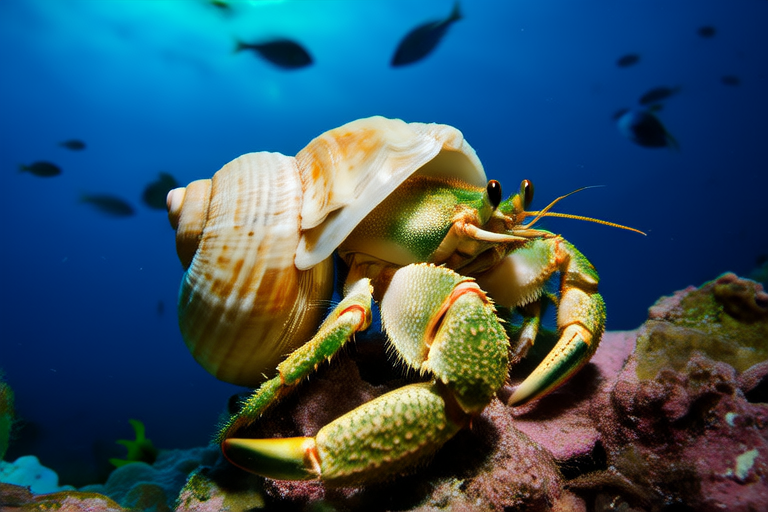
Pea Crabs: Unsung Heroes in Marine Ecosystems
In the vast and diverse world of marine life, pea crabs (Pinnotheridae) stand out as small but significant players in the intricate web of marine ecosystems. These tiny crustaceans, often overlooked by casual observers, play a crucial role in maintaining the balance of marine environments. Their unique adaptations, symbiotic relationships, and life cycles make them fascinating subjects for study and conservation.
Physical Characteristics
Pea crabs are named for their diminutive size, typically ranging from 5 to 20 millimeters in length. Despite their small stature, they possess several distinct features that set them apart from other crab species. Their oval-shaped carapace is soft and pliable, allowing them to fit snugly inside the bodies of their hosts without causing harm. Unlike many other crabs, pea crabs lack the robust claws that their larger relatives use for defense or hunting. Instead, they rely on their ability to blend into their host’s tissues, making them nearly invisible to predators.
Their coloration also varies depending on the host species, often mimicking the hues of their environment. This camouflage helps protect them from potential threats while they reside within the protective shell or tissue of their host. Pea crabs have a pair of relatively large compound eyes, which provide excellent vision even in low-light conditions, aiding them in navigating their aquatic world.
Symbiotic Relationships
One of the most remarkable aspects of pea crabs is their symbiotic relationships with various marine organisms. These relationships can be categorized into two main types: commensalism and parasitism. In commensalism, one organism benefits while the other remains unaffected. For pea crabs, this relationship is primarily with bivalves, such as clams and mussels. The crabs live inside the bivalve’s mantle cavity, feeding on its gametes (eggs and sperm) and mucus secretions. This arrangement provides the crabs with a safe haven and a steady food supply, while the bivalves remain unharmed.
Parasitism, on the other hand, involves a more complex interaction where the parasite benefits at the expense of the host. Some species of pea crabs exhibit parasitic behavior towards certain marine invertebrates, such as sea cucumbers and echinoderms. These crabs may feed on the host’s tissues or fluids, potentially causing some harm. However, the degree of damage is usually minimal, and the relationship is often seen as a form of mutualism where both parties derive some benefit.
These symbiotic relationships highlight the adaptability and resourcefulness of pea crabs. By living within the bodies of their hosts, they gain protection from predators and access to nutrients, ensuring their survival in challenging marine environments.
Life Cycle
The life cycle of pea crabs is as fascinating as their physical characteristics and symbiotic relationships. Females typically carry their eggs under their abdomen until they hatch. Once hatched, the larvae enter the planktonic stage, floating freely in the water column. During this period, they feed on microscopic organisms and undergo several molts before settling down to find a suitable host. The exact timing and duration of these stages can vary depending on environmental factors such as temperature and availability of food.
Once settled, the juvenile crabs begin their symbiotic relationship with their chosen host. As they grow, they continue to molt, shedding their exoskeleton to accommodate their increasing size. This process is essential for their development and allows them to maintain their close fit within the host’s body. The lifespan of pea crabs varies among species but generally ranges from a few months to a couple of years.
Impact on Marine Biodiversity
Pea crabs play a vital role in maintaining marine biodiversity. Their presence within their hosts contributes to the overall health of the ecosystem by controlling populations of certain organisms through predation and competition. For example, by feeding on the gametes of bivalves, pea crabs help regulate the reproduction rates of these animals, preventing overpopulation and ensuring genetic diversity.
Moreover, pea crabs serve as an important food source for larger marine creatures, including fish and seabirds. This makes them integral components of the food chain, supporting the survival and reproduction of numerous species. Their ability to thrive in various marine habitats, from shallow coastal waters to deep-sea environments, further underscores their significance in preserving the delicate balance of marine ecosystems.
Threats to Pea Crabs
Despite their importance, pea crabs face several threats that could jeopardize their survival and, consequently, the health of marine ecosystems. One of the primary challenges is habitat destruction caused by human activities such as coastal development, pollution, and overfishing. These factors can lead to the degradation of the natural habitats where pea crabs and their hosts reside, reducing available resources and increasing vulnerability to predation.
Climate change also poses a significant threat to pea crabs. Rising ocean temperatures and acidification can affect the reproductive success and survival rates of both pea crabs and their hosts. Additionally, changes in ocean currents and weather patterns may disrupt the delicate balance of their symbiotic relationships, leading to population declines.
Efforts to conserve pea crabs and their habitats are essential for maintaining the overall health and resilience of marine ecosystems. By protecting their natural environments and promoting sustainable practices, we can ensure the continued existence of these unsung heroes in our oceans.
Conclusion
Pea crabs may be small, but their contributions to marine ecosystems are immense. Through their unique physical characteristics, symbiotic relationships, and life cycles, they play a vital role in maintaining the balance of marine environments. Understanding and conserving pea crabs is crucial for preserving the biodiversity and health of our oceans. By recognizing their importance and taking steps to protect them, we can ensure the continued prosperity of marine ecosystems for future generations.