
From Ocean Depths to Your Curiosity: All About Pea Crabs
Welcome to a fascinating journey into the world of pea crabs, one of the ocean’s most intriguing inhabitants. These small crustaceans, despite their diminutive size, play a significant role in marine ecosystems. This article will delve into the unique habitat of pea crabs, their symbiotic relationships, physical characteristics, life cycles, and the challenges they face in the wild.
A Brief Introduction to Pea Crabs
Pea crabs (Pinnotheridae) are small crustaceans named for their resemblance to garden peas, both in size and shape. They are found worldwide, from shallow coastal waters to deep-sea environments, making them a diverse group adapted to various marine habitats. Unlike many other crab species that roam freely across the seafloor, pea crabs have chosen a unique way of life – living inside the bodies of other marine organisms, particularly bivalves such as mussels and clams. This intimate association is known as endosymbiosis, where one organism lives inside another, often providing mutual benefits.
The Symbiotic Relationship
The symbiotic relationship between pea crabs and their host bivalves is complex and mutually beneficial. The pea crabs benefit from the protection offered by the thick shell of their hosts, which shields them from predators. In return, the crabs provide some form of service to the bivalves. While the exact nature of this service is still under investigation, it is believed that pea crabs may help clean the gills of their hosts, improving their respiratory efficiency. Additionally, some studies suggest that the presence of pea crabs might deter certain parasites from attaching to the bivalve’s body, further enhancing the host’s health.
Size, Appearance, and Life Cycle
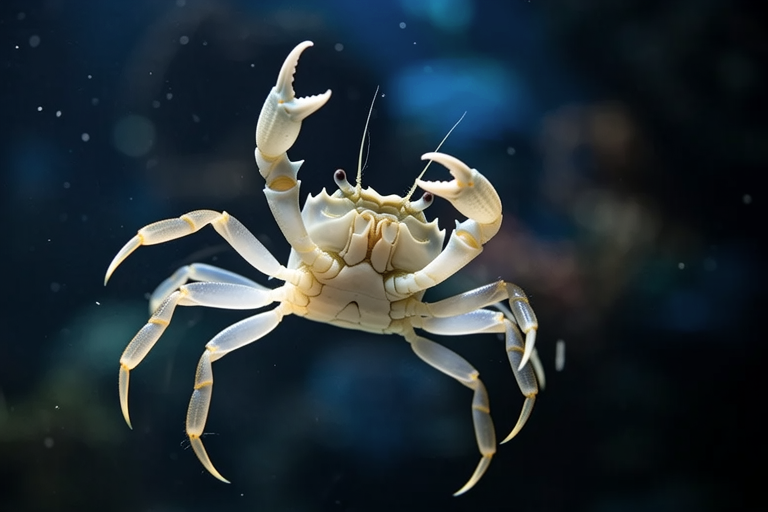
Pea crabs are indeed tiny, typically measuring less than an inch in length. Their carapace, or outer shell, is oval-shaped and smooth, with a soft, delicate texture. They come in various colors, ranging from pale white to light brown, which helps them blend seamlessly with the interior of their host. The legs of pea crabs are slender and well-suited for crawling through the narrow spaces within their host’s body. Their claws are relatively weak compared to those of larger crab species, reflecting their specialized lifestyle.
The life cycle of pea crabs is closely tied to their hosts. Female pea crabs lay eggs inside the mantle cavity of their host bivalve, where the developing larvae remain until they hatch. Once hatched, the larvae are free-swimming and must find a suitable host to settle on. This process is crucial, as finding the right host can determine the survival of the young crabs. After settling into a new host, the larvae undergo metamorphosis, transforming into adult pea crabs. Throughout their life, they continue to rely on their host for protection and resources.
Peculiar Adaptations for Survival
Pea crabs have evolved several remarkable adaptations to thrive in their unique environment. One of the most notable is their ability to tolerate the low-oxygen conditions within the mantle cavity of their host. This adaptation allows them to survive in areas where other marine creatures would struggle. Additionally, pea crabs possess a highly efficient excretory system that helps them manage waste products in the confined space of their host. These adaptations highlight the resilience and adaptability of these tiny crustaceans.
Role in the Marine Ecosystem
Despite their small size, pea crabs play an important role in the marine ecosystem. By maintaining the health of their host bivalves, they indirectly contribute to the overall balance of marine communities. Bivalves, in turn, are vital components of marine ecosystems, filtering water and providing food for numerous other organisms. Thus, the presence of pea crabs can have far-reaching effects on the health and stability of marine environments.
Threats to Pea Crabs
Like many marine species, pea crabs face several threats in the modern world. Habitat destruction due to pollution, overfishing, and climate change poses a significant risk to their survival. Additionally, the introduction of invasive species can disrupt the delicate balance of marine ecosystems, potentially leading to declines in pea crab populations. Conservation efforts aimed at protecting marine habitats and reducing human impacts on the environment are essential for safeguarding the future of these fascinating creatures.
Fascinating Facts and Myths
Pea crabs have long been the subject of fascination and folklore. In some cultures, they are considered symbols of good luck, believed to bring prosperity and fortune to those who encounter them. Another myth suggests that eating bivalves containing pea crabs can lead to a magical transformation, though this is, of course, purely fictional. Scientifically, pea crabs have been studied for their potential as bioindicators of environmental health, helping researchers monitor changes in marine ecosystems.
One interesting fact about pea crabs is their ability to reproduce rapidly, allowing them to quickly colonize new hosts if necessary. This reproductive strategy ensures the continuation of their species even in challenging conditions. Furthermore, the study of pea crabs has provided valuable insights into the evolution of symbiotic relationships, offering clues about how different species have adapted to live together over millions of years.
In conclusion, pea crabs are more than just tiny ocean inhabitants; they are a testament to the complexity and beauty of marine ecosystems. Their unique lifestyle, symbiotic relationships, and adaptations make them a fascinating subject of study. As we continue to explore the depths of our oceans, let us remember the importance of protecting these delicate yet resilient creatures and the ecosystems they call home.