
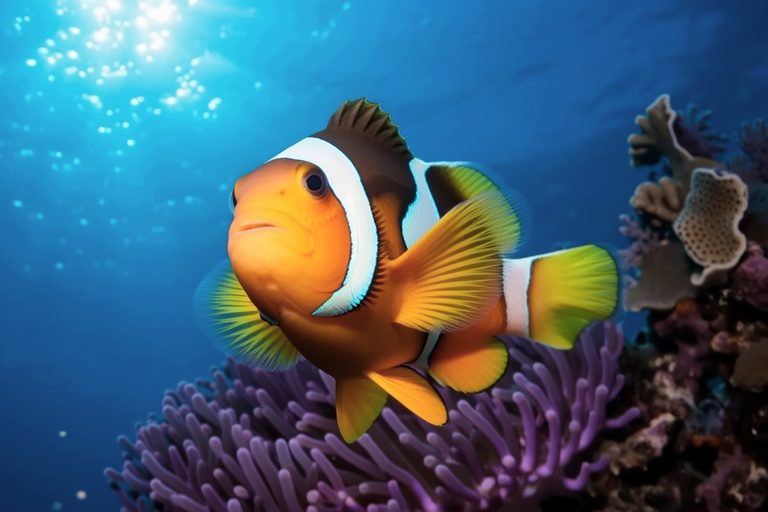
Discover the Hidden World of Clownfish Behavior and Ecology
The vibrant world of clownfish has captivated both scientists and casual observers alike. These small, colorful fish have become iconic symbols of the ocean’s hidden treasures. Known for their striking appearance and close association with sea anemones, clownfish offer a fascinating glimpse into the complex life of marine ecosystems. This article delves into the intricate details of clownfish behavior and ecology, providing readers with an educational yet engaging exploration of these remarkable creatures.
Natural Habitats
Clownfish, also known as anemonefish, are native to the tropical and subtropical waters of the Indo-Pacific region. They inhabit coral reefs, where they find shelter among the tentacles of their host sea anemones. The warm, clear waters of this area provide ideal conditions for both clownfish and their anemone hosts. Clownfish prefer shallow waters, typically between 1 and 15 meters deep, where they can access sunlight and food sources easily. Coral reefs serve as bustling cities for marine life, teeming with diverse species that interact in various ways, forming a delicate balance within the ecosystem.
Symbiotic Relationship with Sea Anemones
One of the most intriguing aspects of clownfish behavior is their symbiotic relationship with sea anemones. This mutually beneficial arrangement allows clownfish to thrive in environments that would otherwise be dangerous for them. Sea anemones possess stinging cells called nematocysts, which they use to capture prey and defend themselves from predators. However, clownfish have developed a thick mucus layer on their skin that protects them from the anemone’s stings. In return, clownfish provide several benefits to their hosts. They help to keep the anemone clean by removing parasites and dead tissue, and they attract potential prey by their movements, increasing the anemone’s feeding opportunities. Additionally, clownfish may deter larger predators that might otherwise threaten the anemone.
Social Structures Within Clownfish Communities
Clownfish live in hierarchical societies within their anemone homes. Each anemone typically hosts a single group of clownfish, ranging from two to six individuals. This group consists of a dominant breeding pair and several non-breeding juveniles. The dominant female is the largest and most aggressive member of the group, while the male is slightly smaller. The breeding pair is responsible for reproducing and caring for the eggs. Non-breeding juveniles assist in maintaining the anemone and protecting the territory against intruders. If the dominant female dies, the largest non-breeding female takes her place, becoming the new dominant breeder.
Breeding Habits
Clownfish reproduce through external fertilization. The breeding pair prepares a nesting site near the base of the anemone, where the male diligently cleans a flat surface to ensure the eggs will adhere properly. When the female is ready to spawn, she lays hundreds or even thousands of tiny, adhesive eggs. The male then fertilizes the eggs by releasing sperm over them. Both parents take turns fanning the eggs with their fins to increase oxygen flow and protect them from fungal infections. After about seven days, the eggs hatch, releasing larvae that float freely in the ocean currents. These larvae eventually settle on suitable anemone hosts, completing the reproductive cycle.
Unique Behaviors for Survival
Clownfish have evolved several unique behaviors to enhance their survival. One such behavior is their ability to change sex. All clownfish are born male, but if the dominant female in a group dies, the largest male will undergo a rapid transformation into a female. This ensures the continuation of reproduction within the group. Additionally, clownfish exhibit territorial behavior, aggressively defending their anemone homes from intruding clownfish or other potential threats. Their bright colors and bold patterns serve as warning signals to predators, indicating that they are well-protected by their anemone hosts. Furthermore, clownfish engage in a behavior known as “dancing,” where they swim around the anemone in a specific pattern, possibly to stimulate the anemone’s tentacles and improve their mutual relationship.
Environmental Changes Impacting Clownfish Ecology
Despite their adaptability, clownfish face significant challenges due to environmental changes. Rising ocean temperatures caused by global warming pose a threat to both clownfish and their anemone hosts. Warmer waters can lead to coral bleaching, a phenomenon where corals expel the algae living within their tissues, turning white and often dying. As corals provide essential habitats for many marine species, including clownfish, their decline can disrupt entire ecosystems. Additionally, increased acidity levels in the ocean, resulting from higher carbon dioxide concentrations, affect clownfish’s ability to detect predators. Studies have shown that elevated CO2 levels impair their sense of smell, making it harder for them to avoid danger. Pollution and overfishing further exacerbate these issues, reducing the availability of healthy habitats and food sources for clownfish.
In conclusion, clownfish are fascinating creatures that play a crucial role in maintaining the balance of coral reef ecosystems. Their symbiotic relationship with sea anemones, complex social structures, and unique behaviors for survival make them captivating subjects of study. However, as environmental changes continue to impact marine habitats, it is essential to understand and address these challenges to ensure the future of clownfish and their ecosystems. By learning more about clownfish behavior and ecology, we can appreciate the beauty and complexity of our oceans and work towards preserving these vital underwater communities.