
Mesmerizing Facts About the Enigmatic Arowana: King of Aquariums
The arowana, often hailed as the ‘King of Aquariums,’ is a truly mesmerizing fish that captivates enthusiasts with its striking appearance and intriguing behaviors. Native to the tropical regions of Asia and South America, these ancient creatures have been revered for centuries, not only for their beauty but also for their cultural significance. This article delves into the physical characteristics, behaviors, native habitats, and the challenges of keeping these magnificent fish in aquariums. We’ll also explore why they are considered the kings of aquariums.
Physical Characteristics
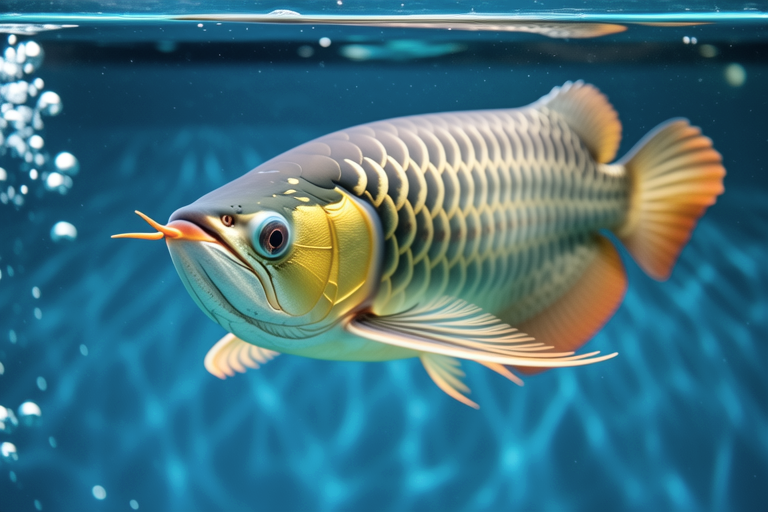
Arowanas are renowned for their distinctive features. They possess elongated bodies, which can grow up to three feet in length, and a long dorsal fin that runs along their back. Their scales are large, robust, and shimmer with a metallic sheen, reflecting colors ranging from green, gold, red, and even blue. The arowana’s eyes are particularly remarkable; they are large, almond-shaped, and positioned high on the head, allowing them to see above the water surface. This adaptation aids in hunting prey and navigating through the dense vegetation of their natural habitats.
Their mouths are wide and powerful, equipped with sharp teeth designed for catching and holding onto prey. This feature is especially impressive when you consider that arowanas are carnivorous and feed on a variety of aquatic creatures, including insects, small fish, and crustaceans. Their jaw structure allows them to perform a unique feeding behavior known as ‘jumping.’ When prey is spotted near the water’s surface, the arowana will leap out of the water to catch it, a trait that has earned them the nickname ‘Dragon Fish’ in some cultures.
Unique Behaviors
Beyond their physical attributes, arowanas exhibit fascinating behaviors that add to their allure. One of the most notable behaviors is parental care. Male arowanas are known to carry their eggs and young in their mouths, ensuring protection until the fry are old enough to fend for themselves. This behavior, known as mouthbrooding, is relatively rare among fish species and underscores the arowana’s role as a dedicated parent.
Another intriguing aspect of arowana behavior is their social dynamics. While they are generally solitary or live in small groups, arowanas can be quite territorial. In aquarium settings, it’s important to provide ample space to prevent aggression towards tank mates. However, when kept in larger tanks with suitable companions, they can display peaceful coexistence. Their intelligence and curiosity make them interactive pets, often responding to their owners and even recognizing individual handlers.
Native Habitats
Native to tropical regions, arowanas thrive in specific environmental conditions. They inhabit slow-moving rivers, swamps, and floodplains, where the water is warm and rich in oxygen. These areas are typically characterized by dense vegetation and muddy substrates, providing ample hiding spots and breeding grounds. In the wild, arowanas are found in countries such as Indonesia, Malaysia, Thailand, and Brazil. Each region hosts distinct species, each adapted to its local environment. For instance, the Asian arowana (Scleropages formosus) is native to Southeast Asia, while the silver arowana (Osteoglossum bicirrhosum) hails from the Amazon Basin.
The natural habitats of arowanas are under threat due to deforestation, pollution, and overfishing. Conservation efforts are crucial to preserve these magnificent creatures in their natural environments. Many countries have implemented regulations to protect arowana populations, including captive breeding programs aimed at reducing pressure on wild stocks.
Cultural Significance and Symbolism
Throughout history, arowanas have held significant cultural importance, particularly in Southeast Asian cultures. They are often associated with prosperity and good fortune, making them popular choices for decorative aquariums in homes and businesses. In Chinese culture, the arowana is believed to bring wealth and success, and it is frequently depicted in artwork and jewelry. The red arowana, in particular, is highly valued and is sometimes referred to as the ‘Dragon Fish.’
This symbolic value has led to increased demand for arowanas, both in the wild and in captivity. However, it’s essential to note that purchasing arowanas should be done responsibly, supporting ethical and sustainable practices to ensure the survival of these species.
Challenges and Requirements for Keeping Arowanas in Aquariums
Keeping arowanas in aquariums presents several challenges due to their size, dietary needs, and space requirements. First and foremost, arowanas require a spacious tank to accommodate their adult size. A minimum of 200 gallons is recommended for a single adult arowana, with additional space for each additional fish. The tank should be equipped with a strong filtration system to maintain water quality and ensure proper oxygenation.
Dietary considerations are another critical aspect of arowana care. As carnivores, arowanas need a varied diet consisting of live or frozen foods like feeder fish, shrimp, and worms. Some hobbyists also incorporate commercially available pellets and sticks designed for predatory fish. It’s important to avoid overfeeding, as this can lead to health issues and poor water quality.
In addition to space and diet, maintaining optimal water conditions is crucial. Arowanas prefer slightly acidic water with a pH between 6.5 and 7.5 and a temperature range of 78 to 84 degrees Fahrenheit. Regular water changes and monitoring of water parameters are necessary to keep the tank environment stable.
Fascinating Facts That Showcase Why They Are Called the Kings of Aquariums
The arowana’s regal status is well-deserved, given its numerous fascinating qualities. One of the most striking aspects is its ability to jump out of the water to catch prey. This behavior, combined with its sleek, majestic appearance, makes it a true spectacle in any aquarium setting. Additionally, the arowana’s longevity adds to its appeal. With proper care, these fish can live for up to 20 years, making them a lifelong companion for dedicated aquarists.
The arowana’s intelligence and interaction with humans further solidify its reputation as a king of aquariums. Many owners report that their arowanas respond to their presence, sometimes swimming closer to the glass or even nudging their hands. This level of engagement is uncommon among fish species and contributes to the arowana’s unique charm.
Moreover, the arowana’s resilience and adaptability make it a challenging yet rewarding species to keep. Its ability to thrive in various conditions, coupled with its stunning appearance and interesting behaviors, ensures that the arowana remains a top choice for advanced aquarists seeking a truly extraordinary pet.
In conclusion, the arowana is a captivating and enigmatic fish that combines beauty, intelligence, and cultural significance. Whether admired for its striking appearance, unique behaviors, or symbolic value, the arowana is undoubtedly the king of aquariums. However, keeping these magnificent creatures requires dedication, knowledge, and commitment to providing the best possible care. By understanding and meeting their needs, aquarists can enjoy the privilege of sharing their home with one of nature’s most fascinating creatures.